Question of 117
Q.Draw : 'Life cycle of plasmodium' by a neat and labelled diagram only.
Gujarat GsebGSEB Higher Secondary Certificate (HSC) Examination 2026Subjective· 3mImportance★★★★★
0% · 0/117 Questions
You're viewing a preview — the full solution, concept, methods & PYQ mapping are locked.
Start your 14-day free trial to unlock the full solution →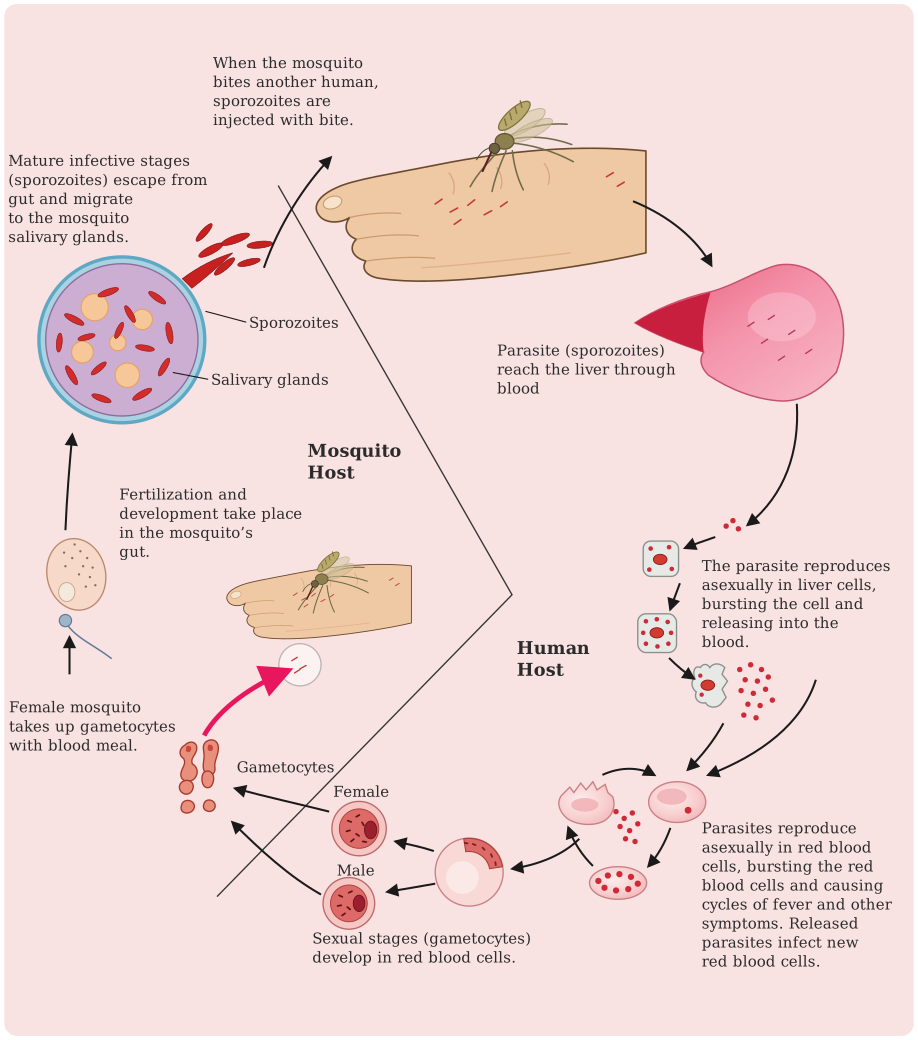
Plasmodium requires two hosts to complete its life cycle: the human (where it multiplies asexually and causes malarial fever) and the female Anopheles mosquito (where it undergoes sexual reproduction).
A diagram is requested but is described here in its correct sequential stages, since this format cannot render an image directly:
- An infected female Anopheles mosquito, while biting a human, injects sporozoites (the infective stage of the parasite) into the person's bloodstream.
- Sporozoites travel to the liver, where they multiply asexually inside liver cells (exo-erythrocytic schizogony), producing merozoites.
- Merozoites are released into the bloodstream and invade red blood cells (RBCs), where they again multiply asexually (erythrocytic schizogony), forming a schizont that eventually ruptures the RBC, releasing more merozoites (along with a toxic substance, haemozoin, that causes the characteristic recurring chills and high fever of malaria) - this cycle of RBC infection and rupture repeats roughly every 3-4 days, corresponding to the periodic bouts of fever.
- Some merozoites, instead of continuing this asexual cycle, differentiate within RBCs into sexual forms called gametocytes (male and female).
- When a female Anopheles mosquito bites the infected person, it takes up these gametocytes along with the blood meal. …
Unlock everything free for 14 days
- Full step-by-step solutions
- Concept-first explanations
- Methods, shortcuts & mistakes
- PYQ mapping + timed mock tests
Full access for 14 days. No credit card required.