Q.Draw well labelled diagram of human Brain.
You're viewing a preview — the full solution, concept, methods & PYQ mapping are locked.
Start your 14-day free trial to unlock the full solution →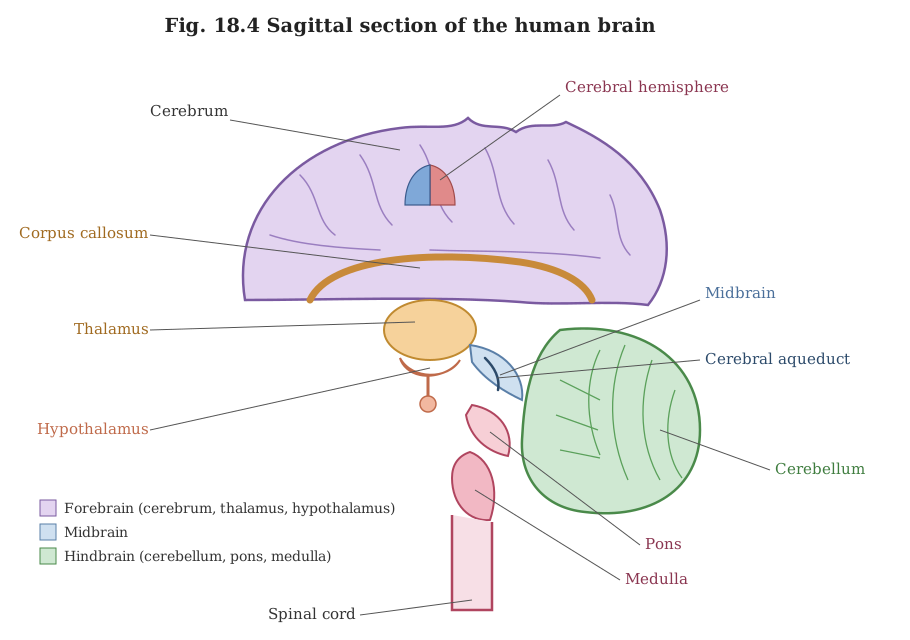
The human brain is divided into forebrain, midbrain and hindbrain; a correctly labelled diagram should show the cerebrum, thalamus, hypothalamus, midbrain, cerebellum, pons and medulla oblongata in their correct relative positions.
Since a diagram itself cannot be rendered here, here is exactly what a correctly labelled diagram of the human brain (sagittal/longitudinal section) should show, from front to back:
-
Forebrain (Prosencephalon):
- Cerebrum: the large, prominent, deeply convoluted (gyri and sulci) region forming the front and top of the brain, divided into left and right cerebral hemispheres connected internally by the corpus callosum. It is the centre for voluntary actions, thought, memory, and intelligence.
- Thalamus: located below the cerebrum, a major relay/coordinating centre for sensory and motor signalling.
- Hypothalamus: lies at the base of the thalamus, controls body temperature, hunger, thirst, and secretes releasing/inhibiting hormones; connected to the pituitary gland just below it.
-
Midbrain (Mesencephalon): a short region connecting the forebrain and hindbrain, containing the corpora quadrigemina (four rounded lobes involved in visual and auditory reflexes).
-
Hindbrain (Rhombencephalon):
- Cerebellum: a smaller, highly folded structure behind and below the cerebrum, responsible for maintaining posture, balance and coordinating voluntary movements. …
Unlock everything free for 14 days
- Full step-by-step solutions
- Concept-first explanations
- Methods, shortcuts & mistakes
- PYQ mapping + timed mock tests
Full access for 14 days. No credit card required.