Q.A 15 years old girl named Ruati experiences severe allergic reactions to crabs. How would you explain the immunological mechanisms involved in Ruati's allergic response to crabs. Support your answer with a suitable diagram. OR Describe the treatment of sewage by aerobic microbes.
🔒You're viewing a preview — the full solution, concept, methods & PYQ mapping are locked.
🔒 Start your 14-day free trial to unlock the full solution →Concept understanding — Hypersensitivity (Allergy)
Hypersensitivity is an exaggerated, overactive immune response to substances (allergens) that are normally harmless — the resulting condition is called allergy. Common allergens include dust mites, pollen and insect-venom proteins; symptoms (sneezing, watery eyes, runny nose, difficulty breathing) typically appear within seconds of exposure and last around half an hour. Allergy is mediated chiefly by IgE antibodies bound to mast cells, whose degranulation releases histamine and serotonin and drives the visible symptoms; hay fever and asthma are common ex …
An allergy to a food protein is a Type-I hypersensitivity reaction, so the mechanism runs from IgE antibodies produced against the allergen, through their binding to mast cells, to the histamine release on re-exposure that causes the symptoms. …
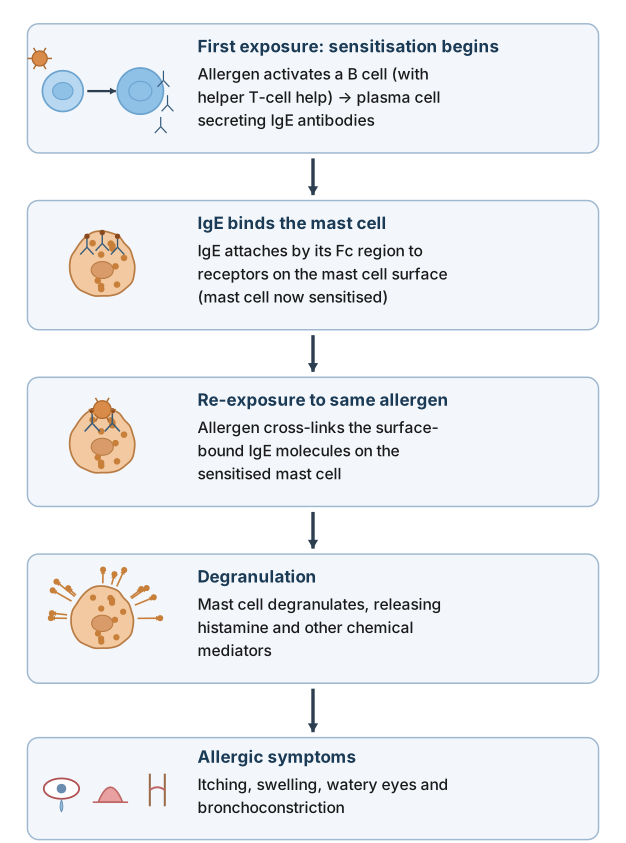
Crab-protein allergens trigger an IgE-mediated (Type I hypersensitivity) immune response: IgE antibodies coat mast cells, and on re-exposure to the allergen these mast cells release histamine and other mediators, producing the classic allergic symptoms.
Immunological mechanism of Ruati's allergic reaction:
-
Sensitisation (first exposure): When Ruati is first exposed to crab proteins (the allergen), her immune system's B cells recognise it and, with the help of helper T cells, differentiate into plasma cells that produce a specific class of antibody called Immunoglobulin E (IgE), rather than the usual IgG.
-
Coating of mast cells: This IgE antibody circulates and binds, via its Fc region, to receptors on the surface of mast cells (and basophils) present in connective tissues throughout the body — this "sensitises" the mast cells to that specific crab allergen, though no symptoms occur yet at this stage.
-
Re-exposure and cross-linking: The next time Ruati eats/is exposed to crab, the allergen binds to and cross-links the IgE molecules already sitting on the sensitised mast cells.
-
Degranulation and mediator release: This cross-linking triggers the mast cells to rapidly degranulate, releasing stored chemical mediators — mainly histamine, along with serotonin and other substances — into the surrounding tissue.
-
Allergic symptoms: These released mediators cause the typical, rapid-onset allergic (Type I hypersensitivity) symptoms — such as itching, redness/inflammation, swelling, watery eyes, a runny nose, and in more severe cases, difficulty in breathing due to bronchoconstriction.
…
Showing the 12 most recent of 13 on this concept.
- CBSE 2026Set 57/2/11 markMCQQ.What is the role of histamine released by mast cells ? (A) Lowers blood pressure (B) Causes allergic symptoms (C) Stimulates antibody formation (D) Destroys pathogens
›Reveal solutionSolution
Histamine released by mast cells is a crucial chemical mediator responsible for triggering and manifesting the various symptoms associated with allergic reactions.
Our immune system is a complex network designed to protect us from harmful invaders. However, sometimes it can overreact to harmless substances, leading to what we call allergies. In these allergic responses, certain cells play a pivotal role, and among them, mast cells are key players, primarily through their release of a chemical called histamine.
Mast cells are a type of white blood cell, specifically granulocytes, that are found in connective tissues throughout the body, particularly in areas exposed to the external environment like the skin, lungs, and digestive tract. They are essentially sentinel cells, poised to respond to perceived threats. When an individual who is sensitive to a particular substance (an allergen) encounters it, their immune system mounts an exaggerated response. This involves the production of specific antibodies, primarily IgE antibodies, which then bind to the surface of mast cells.
Upon subsequent exposure to the same allergen, these allergens bind to the IgE antibodies on the mast cell surface. This binding acts as a trigger, causing the mast cells to degranulate, meaning they release pre-formed chemical mediators stored in their granules into the surrounding tissues. One of the most significant of these mediators is histamine.
ImportantHistamine is a potent vasoactive amine, meaning it has significant effects on blood vessels and other tissues. Its release is central to the immediate hypersensitivity reactions we commonly know as allergies.
The release of histamine by mast cells initiates a cascade of events that manifest as the characteristic symptoms of an allergic reaction. These effects include:
- Vasodilation: Histamine causes the small blood vessels (arterioles) to widen, increasing blood flow to the affected area. This leads to redness and warmth.
- Increased Vascular Permeability: It makes the capillaries more permeable, allowing fluid and immune cells to leak out of the blood vessels and into the surrounding tissues. This leakage of fluid causes swelling (edema).
- Contraction of Smooth Muscles: Histamine can cause the smooth muscles in various organs to contract. For instance, in the bronchi of the lungs, this leads to bronchoconstriction, making breathing difficult (a common symptom in asthma). In the gastrointestinal tract, it can lead to abdominal cramps and diarrhea.
- Stimulation of Nerve Endings: Histamine can stimulate sensory nerve endings, leading to itching and pain.
- Increased Mucus Secretion: In the respiratory tract, it can stimulate glands to produce more mucus, leading to a runny nose and congestion. …
- CBSE 2026Set ANNUAL1 markQ.What is Allergy?
›Reveal solutionSolution
Allergy is the immune system overreacting to substances (allergens) that are normally harmless, producing symptoms like sneezing, watery eyes, and breathing difficulty.
Allergy refers to an exaggerated or hypersensitive response of the immune system to certain antigens present in the environment, called allergens — common examples include dust mites, pollen grains, animal dander, and certain foods.
…
- CBSE 2026Set ANNUAL1 markMCQQ.Allergy involves :(a) IgA(b) IgE(c) IgM(d) IgG
›Reveal solutionSolution
Allergic reactions are driven by IgE antibodies, which sensitise mast cells/basophils so that on re-exposure to the allergen they release histamine and cause the symptoms of an allergic response.
Of the five classes of human immunoglobulins (IgA, IgD, IgE, IgG and IgM), IgE is specifically responsible for mediating immediate (type I) hypersensitivity, or allergic, reactions. When an allergy-prone individual is first exposed to an allergen (such as dust mite protein, pollen or a particular food protein), plasma cells produce IgE antibodies specific to that allergen; these IgE molecules then bind, via their Fc region, to receptors on the surface of mast cells (in tissues) and basophils (in blood), effectively 'arming' or sensitising these cells. On a subsequent exposure to the same allergen, the allergen cross-links the allergen-specific IgE molecules already bound to the mast cell/basophil surface, triggering the cell to rapidly degranulate and release histamine and other inflammatory mediators, producing the classic allergic symptoms -- snee …
- CBSE 2025Set ANNUAL1 markQ.Exaggerated response of the immune system to certain antigens present in the environment is called _____.
›Reveal solutionSolution
An exaggerated, hypersensitive response of the immune system to certain otherwise harmless environmental antigens is called an allergy.
The immune system normally protects the body by recognising and reacting to foreign antigens such as those on pathogens. In some individuals, however, the immune system over-reacts to certain substances present in the environment — such as dust, pollen grains, animal dander, or certain foods — which are otherwise harmless to most people. This exaggerated/hypersensitive response is called an allergy, and the substances that provoke it are called allergens. Common symptoms include sneezing, watery eyes, running nose and difficulty in breathing. This reaction is mediated mainly by an antibody class called IgE, which triggers mast cells to release chemicals such as histam …
- CBSE 2024Set 57/1/11 markMCQQ.In which of the following conditions/diseases is there a substantial increase in the activity of mast cells observed in the human body? (A) Typhoid (B) Allergy (C) Ascariasis (D) AIDS
›Reveal solutionSolution
Mast cells are the primary effector cells of allergic reactions; their activity surges dramatically during an allergic response, making Allergy the correct answer.
The core concept: mast cells are the body's "alarm cells" for immediate hypersensitivity.
Mast cells reside in connective tissues, especially near blood vessels and mucosal surfaces. They are packed with granules containing histamine, heparin, and other inflammatory mediators. When an allergen (like pollen or dust) cross-links IgE antibodies bound to the mast cell surface, the cell degranulates explosively — releasing histamine and causing the classic symptoms of allergy: swelling, itching, redness, and bronchoconstriction. This is a type I hypersensitivity reaction.
Now, let's examine each option against this function:
-
Typhoid — Caused by Salmonella typhi bacteria. The immune response here is primarily cell-mediated (T-cells) and antibody-mediated (IgG, IgM). Macrophages and neutrophils are the key players. Mast cells are not substantially involved; their activity does not increase significantly.
-
Allergy — This is the hallmark condition for mast cell activation. In an allergic individual, mast cells are sensitized by IgE antibodies specific to harmless environmental antigens. On re-exposure, the allergen binds to these surface IgE molecules, triggering rapid degranulation. This is the only condition among the options where mast cell activity is both substantial and diagnostic.
-
Ascariasis — A helminthic infection caused by Ascaris lumbricoides. The immune response against large parasites involves eosinophils (which are recruited to attack the worm), Th2 cells, and IgE production. While mast cells can participate in anti-parasite responses, their increase is not substantial compared to the eosinophil-dominated reaction. The primary effector cells here are eosinophils, not mast cells. …
-
- CBSE 2024Set ANNUAL1 markMCQQ.Which of the following is an antibody against allergy?(a) IgG(b) IgE(c) IgA(d) IgM
›Reveal solutionSolution
IgE is the antibody isotype that mediates allergic (hypersensitivity) reactions by binding to mast cells/basophils and triggering histamine release on contact with an allergen.
When an allergen (like pollen or dust mite protein) enters the body of a sensitised individual, plasma cells produce IgE antibodies, which bind to receptors on mast cells and basophils. On re-exposure, the allergen cross-links these IgE molecules, triggering degranulation and release of histamine and other mediators that cause the classic allergy symptoms (sneezing, watery eyes, rashes, and in severe case …
- CBSE 2024Set ANNUAL1 markMCQQ.Pollen grains of which plant cause allergy ?(a) Coriander(b) Parthenium(c) Triticum(d) None of these
›Reveal solutionSolution
Parthenium pollen is a well-known cause of allergic reactions such as bronchial asthma and allergic rhinitis.
Certain plant pollens, when inhaled, act as allergens and trigger allergic responses such as sneezing, watery eyes, wheezing and bronchial asthma in sensitive individuals. Parthenium (commonly called carrot grass or congress grass), an invasive …
- CBSE 2023Set 57/3/11 markMCQQ.Assertion (A) : More and more children in metro cities of India suffer from allergies and asthma due to sensitivity to the environment. Reason (R) : Modern day lifestyle and a protected environment in early life has resulted in lowering the immunity.
›Reveal solutionSolution
The assertion describes an observed health trend (rising allergies/asthma in urban children), while the reason offers a scientifically supported explanation (the "hygiene hypothesis"). Both statements are true, and the reason correctly explains the assertion.
The Hygiene Hypothesis and Urban Health Trends
The question asks you to evaluate two linked statements about childhood health in Indian cities. Understanding this requires familiarity with a well-established concept in immunology: the hygiene hypothesis.
Our immune system develops through exposure. When young children encounter diverse microbes—bacteria, viruses, parasites—their immune systems learn to distinguish real threats from harmless substances. In overly sanitized environments, this training is incomplete. The immune system, lacking proper "education," begins overreacting to benign triggers like pollen, dust mites, or pet dander. This misdirected response manifests as allergies and asthma.
Metro cities in India present a perfect storm: air pollution, enclosed air-conditioned spaces, reduced outdoor play, excessive use of antibacterial products, and smaller family sizes (fewer infections shared among siblings). Children grow up in what immunologists call a "protected environment"—paradoxically making them more vulnerable.
Evaluating Each Statement
-
Assertion (A) is factually correct.
Epidemiological data from Indian metros (Delhi, Mumbai, Bangalore) show a documented rise in childhood allergic rhinitis, asthma, and atopic dermatitis over the past two decades. The prevalence has increased from roughly 10–15% to 20–30% in urban populations, while rural rates remain lower. This is an observed, measurable trend.
-
Reason (R) is also correct.
Modern lifestyle factors—smaller living spaces, reduced microbial exposure, dietary changes, increased antibiotic use—have been shown to suppress early immune system development. The "protected environment" mentioned is not protective in a beneficial sense; it deprives the immune system of the challenges it needs to mature properly. This lowering of immunity is more accurately described as immune dysregulation: the system becomes hyperactive against the wrong targets. …
-
- CBSE 2023Set ANNUAL1 markQ.State the main cause of allergy.
›Reveal solutionSolution
Allergy results from the immune system over-reacting to normally harmless environmental substances (allergens).
Allergy is an exaggerated or hypersensitive response of the immune system to certain antigens present in the environment, called allergens — common examples include dust, pollen grains, animal dander and mites. On first exposure, the immune system produces IgE-type antibodies specific to the allergen; these antibodies bind to mast cells and basophils. On re-exposure to the same allergen, it cross-links these bound IgE antibodies, causing the mast cells to degranulate and release chemical mediators such as histamine and ser …
- CBSE 2023Set ANNUAL1 markMCQQ.Allergy involves :(a) IgA(b) IgE(c) IgM(d) IgG
›Reveal solutionSolution
Allergic (immediate hypersensitivity) reactions are mediated by IgE antibodies.
When an allergen (like pollen or dust) first enters a sensitive individual, B cells produce IgE antibodies specific to that allergen; these IgE molecules bind to receptors on mast cells and basophils. On subsequent exposure to the same allergen, cross-linking of bound IgE triggers degranulation of these cells, releasing histamine and other inflammatory mediators that cause the classic allergy symptoms (sneezing, watery eyes, breathlessness). Option (a) IgA is the main antibody found in secretions (saliva, tears, mucus) providing mucosal defence, not typically the allergy mediator. Option (c) IgM is the first antibody produced in a primary immune res …
- CBSE 2021Set D1 markMCQQ.Chemical released due to allergy is(a) Histamine(b) Serotonin(c) Both (A) and (B)(d) None of these
›Reveal solutionSolution
During an allergic reaction, mast cells release histamine and serotonin, so the answer is (C) Both (A) and (B).
Allergy is the exaggerated response of the immune system to certain antigens (allergens) present in the environment. On exposure to an allergen, IgE antibodies bind to mast cells, causing them to release chemical mediators.
…
- CBSE 2019Set 57/4/11 markQ.State the functions of mast cells in allergy response.(OR)State the function of interpherons.
›Reveal solutionSolution
Part (a): Mast cells release histamine and other mediators when an allergen binds their surface IgE, producing the immediate symptoms of allergy. Part (b): Interferons are proteins from virus-infected cells that make neighbouring healthy cells resistant to the virus, checking its spread.
Part (a)
Mast cells are granule-containing immune cells present in tissues, especially near blood vessels and mucosal surfaces. Their surface is coated with IgE antibodies specific to an allergen. When that allergen enters the body and cross-links the IgE, the mast cells are activated and undergo degranulation, releasing chemical mediators — chiefly histamine and serotonin. These mediators cause vasodilation, increased capillary permeability and smooth-muscle contraction, giving the familiar allergic response: sneezing, running nose, watery eyes, itching, swelling and difficulty in breathing (as in asthma). …
🎓Unlock everything free for 14 days
- ✓Full step-by-step solutions
- ✓Concept-first explanations
- ✓Methods, shortcuts & mistakes
- ✓PYQ mapping + timed mock tests
Full access for 14 days. No credit card required.