Q.Give the diagrammatic representation of carbon cycle in biosphere.
You're viewing a preview — the full solution, concept, methods & PYQ mapping are locked.
Start your 14-day free trial to unlock the full solution →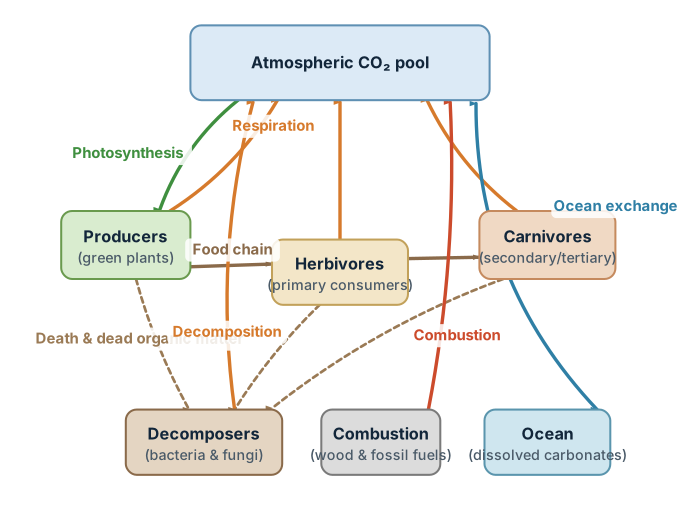
Carbon cycles between the atmosphere, living organisms, and geological reservoirs through photosynthesis (fixation), respiration/decomposition (release), and combustion, with the oceans acting as a huge additional reservoir.
Since this is a text-based answer, the carbon cycle is described here as the sequence of pools and fluxes that would normally be shown in the diagram:
Reservoir: Atmospheric CO₂ is the central pool of the cycle (about 4 × 10¹¹ tonnes of CO₂ present in the atmosphere globally), along with a much larger reservoir dissolved in oceans (about 71% of total carbon is fixed in oceans as dissolved carbonates), and carbon locked in fossilised deposits, i.e. fossil fuels (coal, petroleum).
Pathway/flow:
- Fixation: Green plants and other photosynthetic organisms (producers) absorb atmospheric CO₂ and fix it into organic carbon compounds (glucose) through photosynthesis.
- Transfer through the food chain: This fixed carbon moves from producers to primary consumers (herbivores), then to secondary/tertiary consumers (carnivores), as organisms feed on one another along the food chain.
- Return to the atmosphere via respiration: All living organisms (producers, consumers, and decomposers) release CO₂ back into the atmosphere as a product of cellular respiration.
- Return via decomposition: When organisms die, decomposers (bacteria and fungi) break down the dead organic matter, releasing the carbon locked within it back as CO₂ into the atmosphere/soil.
- Return via combustion: Burning of wood, and of fossil fuels such as coal and petroleum (formed from long-buried, compressed remains of ancient organisms) for energy, releases large amounts of stored carbon back into the atmosphere as CO₂ — this pathway, being additional to natural respiration/decomposition, is a major human-driven contributor to rising atmospheric CO₂ and global warming. …
Unlock everything free for 14 days
- Full step-by-step solutions
- Concept-first explanations
- Methods, shortcuts & mistakes
- PYQ mapping + timed mock tests
Full access for 14 days. No credit card required.