Physical Education · Ch 5 — Physical Fitness, Wellness and Lifestyle
Components of Physical Fitness
Components of Physical Fitness
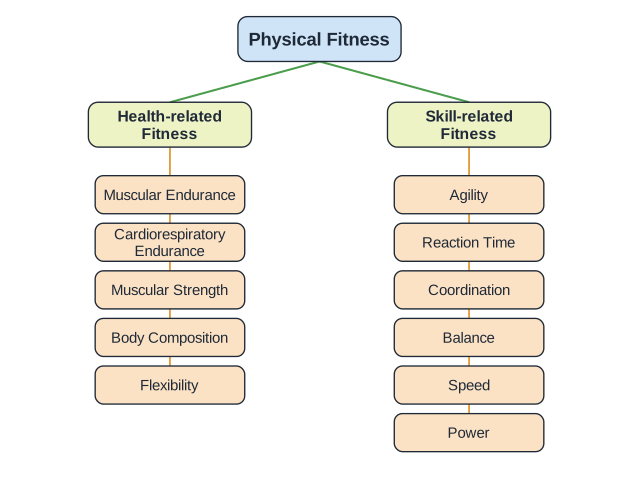
Physical fitness is conventionally divided into two families of components - health-related fitness and skill-related fitness. The chart below shows how the whole of physical fitness splits into these two families and their components.
Drawn by us to help you understand the concept clearly, and verified to make sure it's accurate. For exams, practice from your NCERT textbook's own diagram.
A two-branch tree: the top node 'Physical Fitness' splits into two boxes - 'Health-related Fitness' (listing Muscular Endurance, Cardiorespiratory Endurance, Muscular Strength, Body Composition, Flexibility) and 'Skill-related Fitness' (listing Reaction Time, …
Health-related fitness
There are five health-related components - muscular endurance, cardiorespiratory endurance, flexibility, muscular strength and body composition. These are an integral part of daily life; we use them every day, often without knowing it, and improving them lets us lead a full and healthy life. For example, cardiovascular endurance matters as much to a doctor or farmer as to a sportsperson, and a moderate level of muscular strength is needed just to maintain posture and prevent back, neck and knee pain. These are studied in detail in Section 5.2.4.
Skill-related fitness
There are six skill-related components - agility, balance, coordination, reaction time, power and speed. These are associated with performance: a person with good skill-related fitness can reach a high level of motor skill, which is a prerequisite in sport and in certain jobs. Skill-related fitness is also called sports fitness or motor fitness; it is specific and multi-dimensional (agility, for instance, is needed both in combat sport and in a firefighter's job). These are studied in detail in Section 5.2.5.
Why the two families matter separately
Although both families together make up physical fitness, schools and fitness professionals test them separately because they respond to different kinds of training and serve different purposes. Health-related fitness is built mainly through regular aerobic exercise, strength training, stretching and a balanced diet, and it is the family every person needs, regardless of whether they play competitive sport, because it protects against lifestyle diseases and supports everyday tasks. Skill-related fitness, on the other hand, is sharpened mainly through sport-specific drills and practice - repeated reaction-time drills for a goalkeeper, agility-ladder work for a footballer, balance work for a gymnast - and matters most to someone aiming to perform well in a particular sport or game. …