Biology · Ch 7 — Human Health and Disease
Common Diseases in Humans
Common Diseases in Humans
This section introduces the most common infectious diseases that affect humans — their causative agents, modes of transmission, symptoms, and basic preventive measures. The focus is on understanding how pathogens enter the body, multiply, and produce illness, and how the body's immune system responds.
Bacterial Diseases
Typhoid
Typhoid fever is caused by the bacterium Salmonella typhi. The pathogen enters the body through contaminated food and water. It multiplies in the small intestine and then enters the bloodstream, from where it spreads to other organs.
The main symptoms are high fever (which can last for weeks), weakness, stomach pain, constipation, and headache. In severe cases, intestinal perforation can occur, which is life-threatening.
A definitive diagnostic test for typhoid is the Widal test. This test detects antibodies against S. typhi in the patient's blood.
A classic case from medical history is worth mentioning here: Mary Mallon, nicknamed "Typhoid Mary", was a cook by profession who carried S. typhi without herself showing symptoms, and continued to spread typhoid for several years through the food she prepared. Her case is a well-known illustration of how an outwardly healthy person can still be an infectious carrier of a disease.
Typhoid is transmitted through the faecal-oral route. Poor sanitation and contaminated drinking water are the main reasons for its spread.
Pneumonia
Pneumonia is caused by bacteria such as Streptococcus pneumoniae and Haemophilus influenzae. The infection affects the alveoli (air sacs) of the lungs, which fill with fluid, making breathing difficult.
The pathogen enters the body through droplets released when an infected person coughs or sneezes. It can also spread through sharing utensils or touching contaminated surfaces.
Symptoms include fever, chills, cough with phlegm, and difficulty in breathing. In severe cases, the lips and finger nails may turn gray to bluish in colour, and the patient may need hospitalisation.
Dysentery, plague, and diphtheria are some of the other bacterial diseases that affect humans.
Viral Diseases
Common Cold
The common cold is caused by the Rhinovirus. It is one of the most frequent viral infections in humans.
The virus enters the body through the nose or mouth, usually when a person touches a contaminated surface and then touches their face. It multiplies in the nasal passages and throat.
Symptoms include a runny or stuffy nose, sneezing, sore throat, and mild fever. The infection is usually self-limiting and resolves within a week.
Antibiotics are ineffective against the common cold because it is caused by a virus, not bacteria. Overuse of antibiotics for viral infections contributes to antibiotic resistance.
Protozoan Diseases
Malaria
Malaria is caused by the protozoan parasite Plasmodium. Different species of Plasmodium (P. vivax, P. malariae, and P. falciparum) cause different types of malaria. P. falciparum is the most dangerous and can be fatal.
The parasite is transmitted by the female Anopheles mosquito. When the mosquito bites an infected person, it ingests the parasite. The parasite then develops inside the mosquito and is injected into the next person the mosquito bites.
The life cycle of Plasmodium involves two hosts:
- In humans: The parasite first multiplies in the liver cells, then enters red blood cells, where it multiplies further. The rupture of red blood cells releases toxins that cause the characteristic fever cycles.
- In mosquitoes: The parasite undergoes sexual reproduction in the mosquito's gut.
Symptoms include high fever with chills that recur every three to four days, headache, and vomiting. Severe malaria can cause anaemia, kidney failure, and coma.
The female Anopheles mosquito is the vector for malaria. Only female mosquitoes bite because they need blood for egg development.
Amoebiasis (Amoebic Dysentery)
Amoebiasis is caused by the protozoan Entamoeba histolytica. It is transmitted through contaminated food and water, especially in areas with poor sanitation.
The parasite infects the large intestine, causing inflammation and ulcers. Symptoms include abdominal pain, cramps, and stools with mucus and blood.
Helminth (Worm) Diseases
Ascariasis
Ascariasis is caused by the roundworm Ascaris lumbricoides. It is one of the most common helminth infections worldwide.
The infection occurs when a person ingests food or water contaminated with Ascaris eggs, which then develop into adult worms in the intestine.
Symptoms include internal bleeding, muscular pain, fever, anaemia, and blockage of the intestinal passage.
Filariasis (Elephantiasis)
Filariasis is caused by the filarial worms Wuchereria bancrofti and W. malayi. The adult worms live in the lymphatic vessels.
The pathogens are transmitted to a healthy person through the bite of female mosquito vectors.
The worms block the lymphatic vessels, causing fluid accumulation and swelling, especially in the legs, arms, and genitals. This leads to the characteristic enlargement known as elephantiasis. The condition is chronic and can cause severe disability.
Fungal Diseases
Ringworm
Ringworm is a fungal infection of the skin, hair, or nails. It is caused by dermatophyte fungi such as Microsporum, Trichophyton, and Epidermophyton.
The infection is transmitted through direct contact with an infected person or animal, or through contaminated objects like towels, combs, or bedding. It thrives in warm, moist environments.
Symptoms include circular, red, itchy patches on the skin. The patches have a raised, scaly border and a clearer centre, giving them a ring-like appearance. The infection can spread to other parts of the body.
Ringworm is not caused by a worm — the name comes from the ring-shaped rash. It is a fungal infection and is treated with antifungal creams or oral medications.
Summary Table of Common Diseases
| Disease | Causative Agent | Mode of Transmission | Key Symptoms |
|---|---|---|---|
| Typhoid | Salmonella typhi (bacterium) | Contaminated food/water | High fever, weakness, stomach pain |
| Pneumonia | Streptococcus pneumoniae, Haemophilus influenzae (bacteria) | Droplets from cough/sneeze | Fever, chills, cough, difficulty breathing |
| Common Cold | Rhinovirus (virus) | Droplets, contaminated surfaces | Runny nose, sneezing, sore throat |
| Malaria | Plasmodium species (protozoan) | Bite of female Anopheles mosquito | Fever with chills at regular intervals |
| Amoebiasis | Entamoeba histolytica (protozoan) | Contaminated food/water | Abdominal pain, diarrhoea with mucus/blood |
| Ascariasis | Ascaris lumbricoides (roundworm) | Contaminated food/water | Abdominal pain, nausea, malnutrition |
| Filariasis | Wuchereria bancrofti (filarial worm) | Bite of infected mosquito | Swelling of limbs/genitals (elephantiasis) |
| Ringworm | Microsporum, Trichophyton, Epidermophyton (fungi) | Direct contact, contaminated objects | Circular, itchy, red patches on skin |
Prevention and Control
The most effective way to prevent infectious diseases is to break the chain of transmission. This includes:
- Maintaining personal hygiene — washing hands with soap, especially before eating and after using the toilet.
- Ensuring safe drinking water — boiling or filtering water.
- Proper sanitation — using toilets and disposing of waste safely.
- Avoiding contact with infected individuals or their belongings.
- Using mosquito nets and repellents to prevent mosquito-borne diseases. …
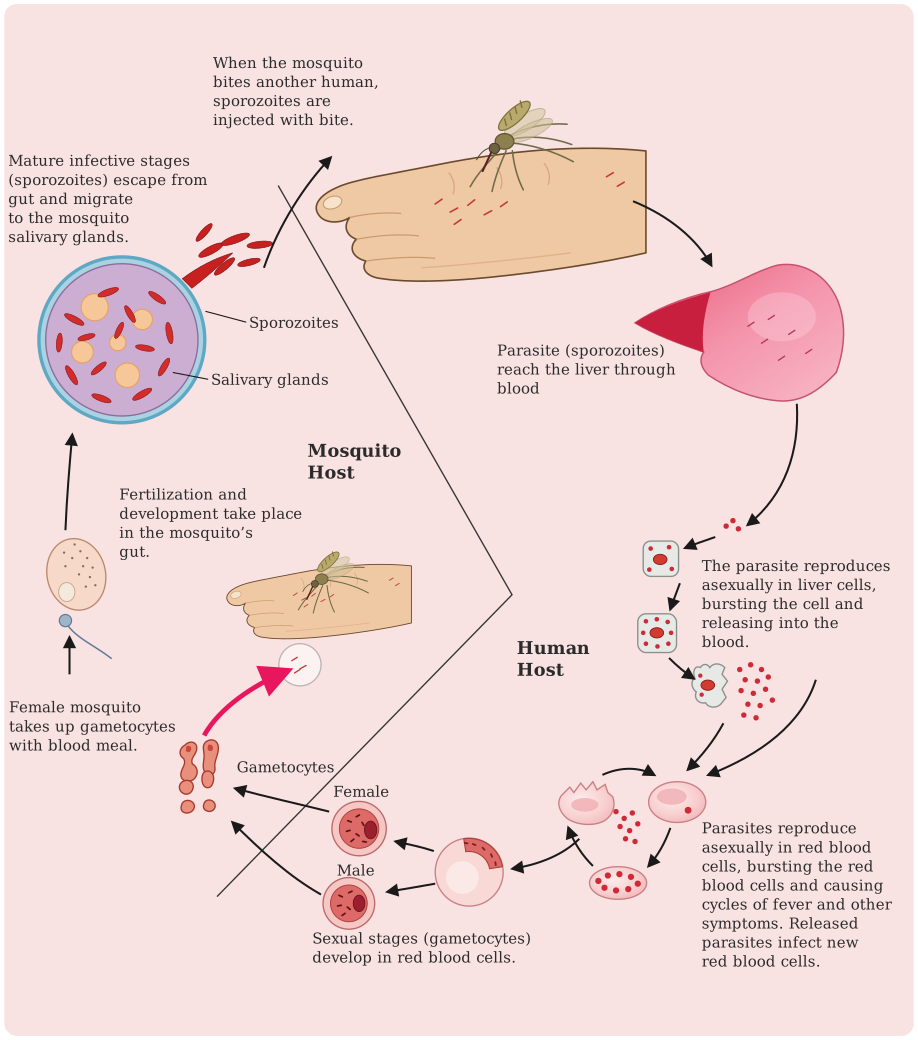
Drawn by us to help you understand the concept clearly, and verified to make sure it's accurate. For exams, practice from your NCERT textbook's own diagram.
The figure is a cyclic diagram tracing the life cycle of Plasmodium across two hosts — humans and the female Anopheles mosquito — arranged as a ring with plain, descriptive captions at each stage (the real figure does not use technical stage names like "schizogony" or "ookinete"; it simply describes what is happening).
An infected mosquito bites a human and injects the infective stage of the parasite. The parasite multiplies asexually inside liver cells, then bursts out and invades red blood cells, where it multiplies again — this repeated rupturing of red blood cells is what produces malaria's recurring fever cycles. Some parasites in the blood develop into sexual stages; when another mosquito bites the infected person, it picks these up. Fertilisation and further development take place inside the mosquito's gut, eventually producing the infective stage again in the mosquito's salivary glands — ready to be injected into the next person, completing the cycle. …
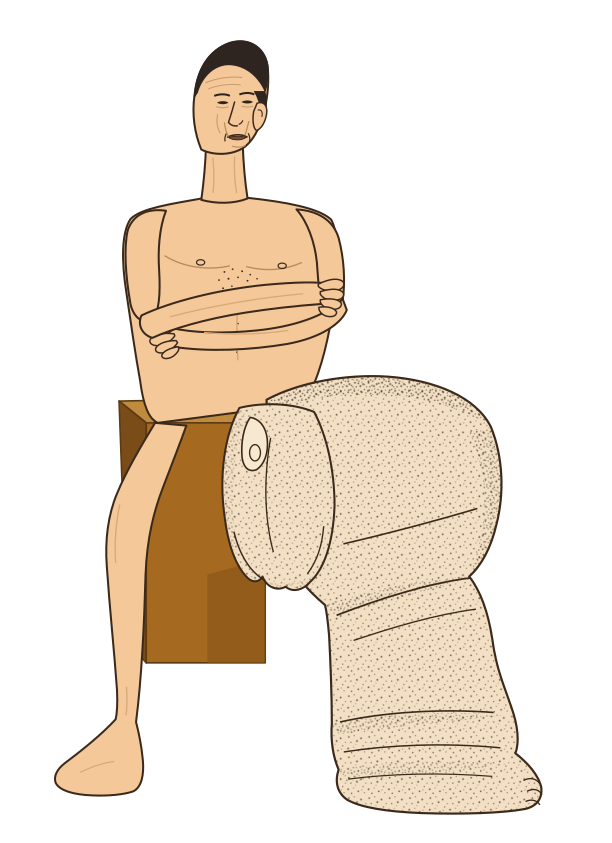
Drawn by us to help you understand the concept clearly, and verified to make sure it's accurate. For exams, practice from your NCERT textbook's own diagram.
The real NCERT figure shows a seated human figure — head, torso, and crossed arms visible — with one leg grossly swollen from the ankle up, and visible swelling of the genital region as well; it is not simply an isolated leg on a blank background.
This illustrates the end-stage of elephantiasis (lymphatic filariasis), caused by the filarial worm Wuchereria bancrofti. The worms lodge in the lymphatic vessels, blocking them and causing chronic lymph accumulation. Over years this persistent fluid build-up leads to massive swelling (lymphoedema) and fibrosis of the affected tissue — matching the textbook's own description that the genital organs are often affected too, resulting in gross deformities alongside the more commonly pictured swollen limb. …
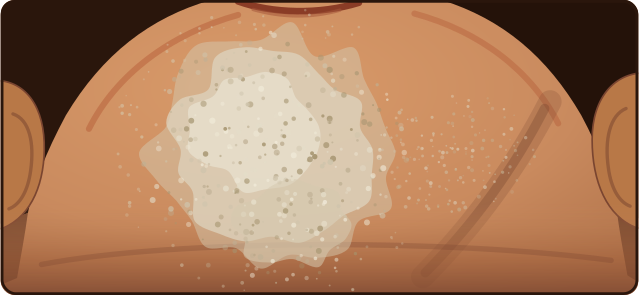
Drawn by us to help you understand the concept clearly, and verified to make sure it's accurate. For exams, practice from your NCERT textbook's own diagram.
The real NCERT figure is a photograph of a human chin and jaw showing a ringworm lesion — a body part is clearly visible, not just an isolated skin patch. This platform's own drawing simplifies that to an abstract skin patch (a deliberate own-artwork redraw, since the real photograph itself can't be reproduced), but the clinical pattern it depicts is faithful: a dry, scaly, ring-shaped lesion with a clearer, healing centre and a raised, reddish, scaly border that expands outward as the fungus grows.
Ringworm (tinea) is caused by fungi — Microsporum, Trichophyton, and Epidermophyton — that infect the keratinised tissue of skin, hair and nails. They feed on keratin, producing enzymes that break it down and cause the scaly, inflamed border; the centre clears as the infection's active edge moves outward. …