Physical Education · Ch 7 — Fundamentals of Anatomy and Physiology in Sports
Importance of Anatomy and Physiology
Importance of Anatomy and Physiology
Knowing how the body is built and how it works is not academic detail - it shapes almost every practical decision a coach, teacher or athlete makes. The handbook sets out the importance of anatomy and physiology under the following heads.
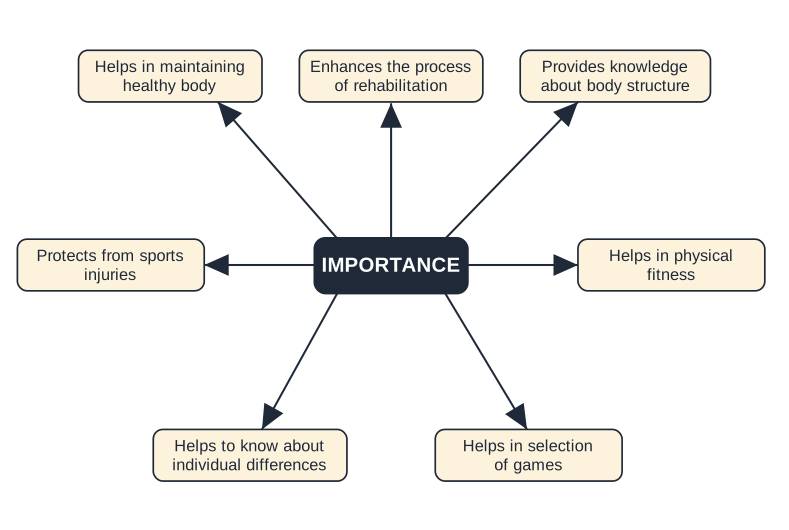
Drawn by us to help you understand the concept clearly, and verified to make sure it's accurate. For exams, practice from your textbook's own diagram.
A spider/hub diagram: a central box labelled IMPORTANCE with arrows radiating out to seven labelled boxes - Helps in physical fitness; Provides knowledge about body structure; Enhances the process of rehabilitation; Protects from sports injuries; Helps in selection of games; Helps to know about indivi …
1. Helps in physical fitness
Understanding the principles of anatomy and physiology helps a person learn about the body and its functioning, which in turn helps them become fit and healthy - for example by building muscle strength and muscular endurance through the right exercises.
2. Provides knowledge about body structure
With a knowledge of anatomy and physiology we can assess our own strengths and weaknesses and then work to improve the body - for example designing an exercise routine that suits a particular individual's requirements and build.
3. Provides knowledge about the functions of the body's organs
It equips us with important knowledge about our body and its systems, so that we can train the body to function at its best and lead a healthy, active life. Knowledge of the cardiovascular system, for instance, helps us value the heart and understand why physical activity keeps it strong.
4. Helps in the selection of games
Based on a knowledge of body structure, a person can choose a suitable game or sport. A tall person, for example, is well suited to basketball or volleyball, while kho-kho suits a person of shorter height.
5. Protects from sports injuries
Sports injuries such as sprains, contusions, fractures and dislocations are common on the field. Protective equipment is designed on a knowledge of anatomy so as to shield the soft, delicate organs - cricket leg pads and helmets, for example, are designed from an understanding of a player's anatomy and physiology.
6. Helps in the process of rehabilitation
A sound knowledge of the body helps people recover from injury and return to their pre-injury level. If a friend twists an ankle while running, someone who understands the anatomy can give sensible first aid - such as applying ice - before taking the injured person to a doctor.
7. Helps in maintaining a healthy body
By making a few lifestyle changes with a knowledge of the body, a person can reach an ideal weight and stay healthy. Anatomy also tells us about good and bad posture while sitting, standing, lying down and running. …