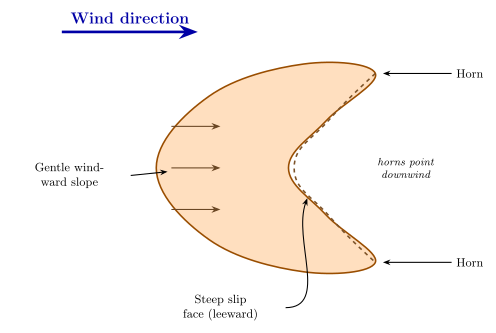
Q.Can you identify the type of sand dunes shown in Figure 2.6 (The Indian Desert)?
You're viewing a preview — the full solution, concept, methods & PYQ mapping are locked.
Start your 14-day free trial to unlock the full solution →The dunes in Figure 2.6 are barchans — crescent-shaped sand dunes formed by wind action in the Indian Desert, with their horns pointing downwind.
The Indian Desert, also called the Thar Desert, is a land shaped almost entirely by wind. In its vast, sandy expanses, the wind does not just blow — it sculpts. Over centuries, it piles loose sand into a variety of forms, each with its own name and story. The figure you are looking at shows one of the most distinctive of these forms: the barchan.
A barchan is a crescent-shaped dune. Picture a smooth, curved mound of sand with two pointed "horns" trailing off to one side. The curve faces the wind, and the horns point in the direction the wind is blowing. This shape is not random — it is the direct result of how wind moves sand. The wind pushes sand up the gentle, windward slope. Once it crosses the crest, the sand drops on the steeper, leeward side, and the dune slowly migrates forward. The horns form because the edges of the dune move faster than the middle, where more sand is piled up.
In the Indian Desert, barchans are common in areas where the sand supply is limited and the ground is relatively flat. They are not the only dune type — there are also longitudinal dunes that run parallel to the wind, and transverse dunes that form at right angles to it. But the barchan is the one most people recognise, and it is the one shown in the figure. …
Unlock everything free for 14 days
- Full step-by-step solutions
- Concept-first explanations
- Methods, shortcuts & mistakes
- PYQ mapping + timed mock tests
Full access for 14 days. No credit card required.