Political Science · Ch 12 — Freedom
The Ideal of Freedom
The Ideal of Freedom
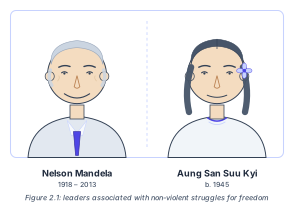
One of the twentieth century's greatest figures, Nelson Mandela, titled his autobiography Long Walk to Freedom. In it he describes his personal struggle against South Africa's apartheid regime — the humiliations, hardships and police brutality faced by black South Africans, from being forced into segregated townships and denied free movement, to being denied even a free choice of whom to marry. Together these measures formed a whole system of constraints that discriminated between citizens purely on the basis of race. For Mandela and his colleagues, the fight was against these unjust constraints — the struggle to remove the obstacles to freedom for all the people of South Africa, not only the black population but the white population too. For this freedom, Mandela gave up twenty-seven years of his life, much of it in solitary confinement — giving up his youth, his friends, his favourite game (he loved boxing), his own clothes and music, and every festival that was part of his life, without knowing when, or if, he would ever be released.
Drawn by us to help you understand the concept clearly, and verified to make sure it's accurate. For exams, practice from your NCERT textbook's own diagram.
Nelson Mandela and Aung San Suu Kyi, leaders associated with non-violent struggles for freedom, introducing the chapter's opening discussion of what freedom means. Own-illustrated for this platform from the real NCERT page's own facts (composition, labels, and content are recreated; the specific artistic rendering of any real pho …
…