Political Science · Ch 15 — Rights
Introduction
Introduction
In everyday life, the word 'right' comes up constantly — the right to vote, the right to form a political party, the right to contest an election. But rights are claimed far beyond politics: people today also demand the right to information, the right to clean drinking water, and other entitlements that touch daily life. Rights are not confined to how citizens deal with the government; they extend into social relationships and personal life as well, and they are sometimes claimed not just for adult citizens but for children, unborn foetuses, and even animals. This chapter asks three linked questions: what do we actually mean when we speak of a 'right'; on what basis can a claim to a right be justified; and why do rights matter enough that societies build their politics, laws, and constitutions around protecting them?
Drawn by us to help you understand the concept clearly, and verified to make sure it's accurate. For exams, practice from your NCERT textbook's own diagram.
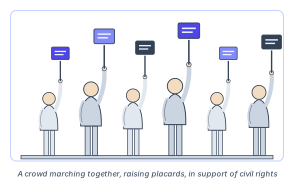
A crowd marching together and raising placards in support of civil rights, introducing the chapter's opening discussion of what rights mean and why they matter. Own-illustrated for this platform from the real NCERT page's own facts (composition, labels, and content are recreated; the specific artistic rendering of any real photograph or cartoon on that page is never traced or copied).
The illustration that opens this chapter is our own artwork, evoking the kind of scene captured in real archival photographs of the American civil rights movement of the 1960s, when marchers carried placards demanding voting rights and an end to segregation. That march is a powerful illustration of the chapter's central idea: rights are not simply handed down by those already in power — they are very often won through sustained, collective struggle by people who were denied full and equal standing in their own society, and who insisted that their claims be recognised as rights rather than treated as mere requests.