Psychology · Ch 3 — Human Development
Context of Development
Context of Development
Development never happens in a vacuum — it is always embedded within a particular socio-cultural context. Major life transitions such as starting school, entering adolescence, finding a job, marrying, having children, and retiring, are all joint outcomes of a person's own biological changes and the changes taking place in their environment; and that environment itself can shift at any point across the life-span.
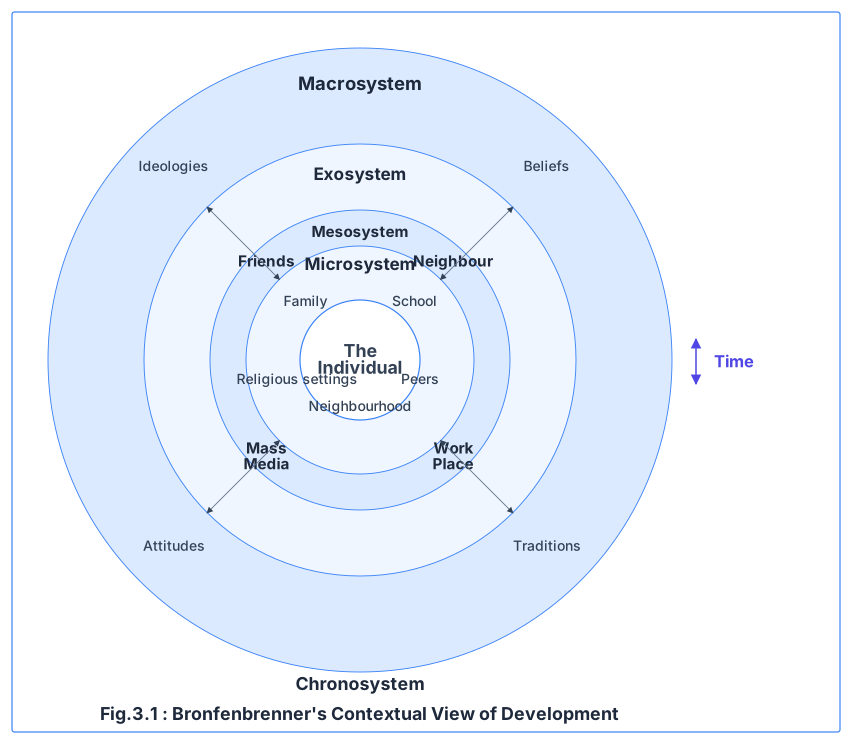
Urie Bronfenbrenner's contextual (ecological systems) view of development highlights how environmental factors at several different levels, nested inside one another like concentric layers, shape a developing person.
Drawn by us to help you understand the concept clearly, and verified to make sure it's accurate. For exams, practice from your NCERT textbook's own diagram.
Fig.3.1: Bronfenbrenner's Contextual View of Development — concentric rings (Microsystem, Mesosystem, Exosystem, Macrosystem, Chronosystem) nested around 'The Individual', each ring naming the settings and influences at that level, with a Time arrow marking the Chronosystem. Own-illustrated for this platform from the real NCERT page's own facts (composition, labels, and layout are recreated; the spec …
The microsystem is the immediate setting the individual actually lives and interacts in — family, school, peers, and neighbourhood — where the child directly engages with people such as parents, teachers and friends. The mesosystem consists of the relationships between these immediate settings — for example, how a child's parents relate to their teachers, or how parents view their adolescent's friends — and these connections themselves influence the child's relationships with others. The exosystem covers social settings the child does not directly take part in but that still shape their everyday experience — for instance, a parent's transfer at work can create tension between the parents that affects how they interact with the child, or can change the quality of schooling, libraries, medical care or entertainment available to the child. The macrosystem is the broad culture — the ideologies and belief systems — within which the individual lives. The chronosystem covers events within an individual's own life course together with the wider socio-historical circumstances of the time — for example a parents' divorce, or a family's economic setback, and how these events affect the child. In short, Bronfenbrenner's view is that a child's development is significantly shaped by the whole complex world that surrounds them — from the small, everyday conversations with a friend, to the larger social and economic circumstances a child is simply born into — and because this ecological environment can change at any point in the life-span, understanding an individual's functioning requires understanding the context of their actual, lived experience. …