Biology · Ch 9 — Biomolecules
Structure of Proteins
Structure of Proteins
Proteins are heteropolymers — long chains made from many different amino acids strung together. Because they are so large and elaborate, biologists do not describe a protein's shape with a single picture. Instead they recognise that the word "structure" can mean different things in different sciences. A chemist working with an inorganic salt often means just the molecular formula, such as NaCl or MgCl2. An organic chemist usually draws a flat, two-dimensional picture of a molecule, as with benzene or naphthalene. A physicist tends to imagine the full three-dimensional arrangement. For proteins, biologists find it useful to describe the structure at four separate levels.
Primary structure
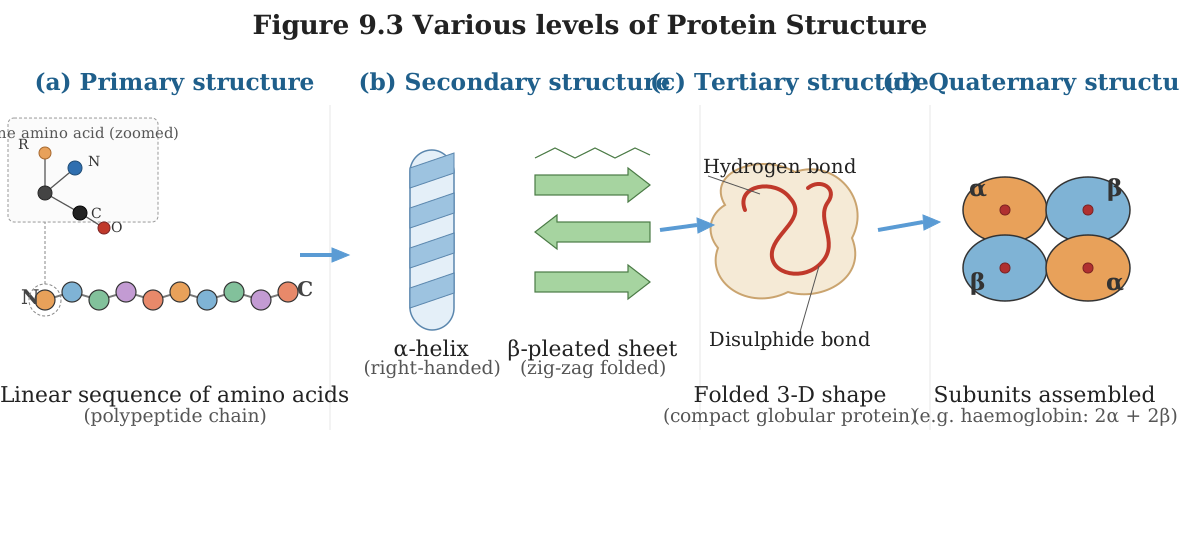
The primary structure is simply the sequence of amino acids — the positional information that tells you which amino acid comes first, which is second, and so on all the way along the chain. It helps to picture a protein as a line. The left-hand end is the first amino acid and the right-hand end is the last amino acid.
- The first amino acid at one end is called the N-terminal amino acid.
- The last amino acid at the other end is called the C-terminal amino acid.
Secondary structure
A real protein thread does not stay stretched out as a stiff, straight rod. Parts of it coil up. In some stretches the chain twists into a helix, much like a spiral or revolving staircase — and importantly, only right-handed helices occur in proteins. Only certain portions of the thread take up the helix; other portions fold into different regular shapes. These locally folded arrangements together make up the secondary structure.
Tertiary structure
Beyond these local coils, the whole long chain folds back upon itself, rather like winding a length of wool into a hollow ball. This overall folding gives the protein its full three-dimensional shape, called the tertiary structure. This level matters enormously: the tertiary structure is absolutely necessary for the many biological activities a protein performs. Without the correct 3-D fold, the protein cannot do its job.
Quaternary structure …
Drawn by us to help you understand the concept clearly, and verified to make sure it's accurate. For exams, practice from your NCERT textbook's own diagram.
This four-panel figure shows the levels at which a protein's structure can be described. (a) The primary structure is simply the linear sequence of amino acids strung together in the polypeptide chain, running from the amino (N) end to the carboxyl (C) end.
(b) The secondary structure is the way that chain regularly coils or folds locally — into a right-handed alpha-helix or a beta-pleated sheet.
(c) The tertiary structure is the overall three-dimensional shape the whole chain takes when it folds and bends back on itself into a compact form, which the protein needs in order to work. …