Geography · Ch 4 — Primary Activities
Methods of Mining
Methods of Mining
Mining: Getting Minerals Out of the Earth
Mining is the process of extracting minerals from the earth. The method used depends entirely on two things: how the mineral deposit occurs (its mode of occurrence) and the nature of the ore itself. Based on these factors, mining is classified into two broad types: surface mining and underground mining.
Surface Mining (Open-Cast Mining)
This is the easiest and cheapest way to mine minerals. It is used when the mineral deposit lies close to the surface.
- Key features: The top layer of soil and rock (overburden) is removed to expose the mineral. The operation is carried out in the open, like a giant quarry or pit.
- Costs: Overhead costs — things like safety precautions and equipment — are relatively low compared to underground methods.
- Output: The output is both large and rapid. Because the mineral is right there, extraction is fast and can be done on a massive scale.
Surface mining is also sometimes called strip mining, especially when the mineral seam is horizontal and is removed in strips.
Underground Mining (Shaft Method)
When the ore lies deep below the surface, surface mining is not possible. In such cases, the underground mining method, also called the shaft method, is used.
- The process: Vertical shafts are sunk into the ground. From the bottom of these shafts, horizontal passages called galleries radiate outwards to reach the mineral deposits.
- Extraction and transport: Minerals are extracted from the galleries and then transported back to the surface through these same shafts and passages.
- Equipment required: This method is far more complex. It requires specially designed equipment, including:
- Lifts (to move people and minerals up and down the shaft)
- Drills (for breaking rock)
- Haulage vehicles (to move ore through the galleries)
- A ventilation system (to provide fresh air and remove poisonous gases)
- Safety: This method is risky. The dangers are serious and include:
- Poisonous gases
- Fires
- Floods (water seeping in)
- Caving in (roof collapses)
These hazards lead to fatal accidents. The textbook asks you to recall if you have ever read about mine fires and flooding of coal mines in India — these are real and recurring problems in underground mining.
Underground mining is significantly more dangerous and expensive than surface mining. The need for ventilation, lifts, and constant safety measures drives up costs.
A Global Shift in Mining
The textbook notes an important economic trend in the mining industry:
- Developed economies (like the USA, Europe, Japan) are retreating from the mining, processing, and refining stages of production. The main reason is high labour costs. …
This photograph shows a real-world example of offshore oil drilling — a specialised form of mining that does not fit neatly into the two categories (surface and underground) described in the textbook text. The rig is a fixed platform standing on the seafloor in the Gulf of Mexico, with the water surface visible in the background. Two workers are visible on the deck, operating drilling machinery. The key objects are the derrick (the tall, lattice-like steel tower that supports the drill pipe) and the drill floor (the platform where the actual drilling takes place). There are no panels, arrows, or labels in the photograph — it is a single, unannotated image.
What this figure teaches is that mining is not limited to land. When mineral deposits (here, crude oil and natural gas) lie beneath the seabed, companies build platforms that function as miniature factories at sea. The drilling operation shown is essentially a vertical shaft sunk through the water column and into the seafloor, but the "shaft" is a steel pipe, not a mine tunnel. The workers on the rig perform the same tasks as underground miners — operating drills, monitoring pressure, and extracting the resource — but in a far more hazardous environment (high pressure, flammable gases, corrosive saltwater, and isolation from shore). …
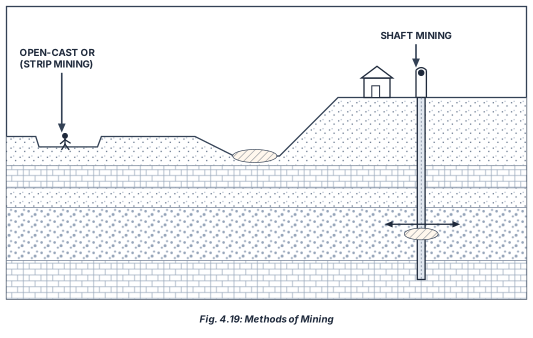
The diagram is a cross-section view of the Earth’s crust, cut vertically to show the ground surface and the rock layers beneath it. The entire section is divided into two halves by a clear vertical boundary. On the left side, the method labelled OPEN-CAST OR (STRIP MINING) is shown. Here, the uppermost soil and rock layers have been removed to create a wide, shallow pit that reaches down only a short distance into the upper strata. A downward-pointing arrow runs alongside this pit, emphasising that the excavation is open to the sky and stays near the surface. The rock layers in this half are drawn as distinct horizontal bands — some dotted, some dashed, some with a brick-like pattern — but the pit cuts through only the top few of them.
On the right side, the method labelled SHAFT MINING is depicted. At the surface, a few small building-like structures are drawn, representing the headframe and winding gear above the mine entrance. From the surface, a single vertical shaft plunges straight down through all the horizontally hatched rock strata — the same dotted, dashed and brick-pattern layers — reaching far deeper than the open-cast pit on the left. At the bottom of this shaft, a horizontal gallery (or level) extends sideways, shown with double-headed arrows to indicate that it branches out to reach the ore body. The ore itself is not explicitly drawn, but the gallery’s arrows point toward where it would lie within the deep rock. …