Applied Mathematics · Ch 8 — Index Numbers and Time-based Data
Concept Map
Concept Map
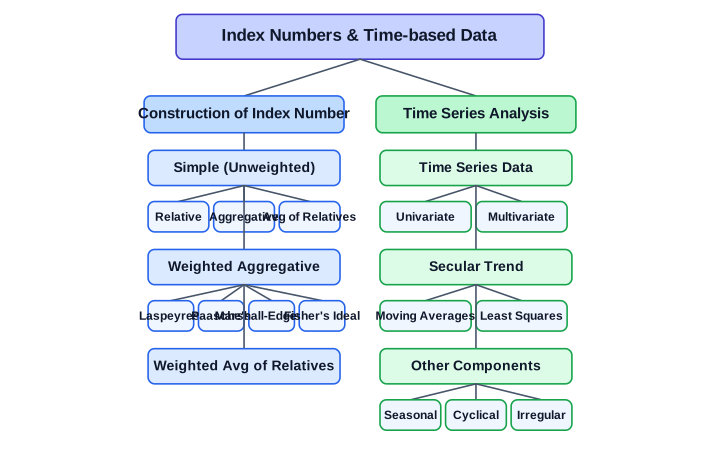
This concept map shows how the chapter fits together. It has two halves. Constructing an index number can be done by simple (unweighted) methods — the relative, aggregative and simple-average-of-relatives methods — or by weighted methods, chiefly the weighted aggregative family (Laspeyres', Paasche's, Marshall-Edgeworth and Fisher's Ideal) and the weighted average of relatives. Time-series analysis studies data recorded over time (univariate or multivariate), separating out the secular trend (found by moving averages or least squares) from the seasonal, cyclical and irregular components.
Drawn by us to help you understand the concept clearly, and verified to make sure it's accurate. For exams, practice from your NCERT textbook's own diagram.
Concept map of the chapter.