Applied Mathematics · Ch 10 — Linear Programming Problem
Concept Map
Concept Map
This concept map shows how the chapter fits together. A linear programming problem is built from four ingredients — decision variables, an objective function, linear constraints and non-negativity conditions. Common types of LPP include manufacturing, diet, transportation and assignment problems. An LPP in two variables is solved graphically, either by the corner-point method (evaluating the objective at each vertex of the feasible region, which may be bounded or unbounded) or by the iso-profit / iso-cost method (sliding a line of constant objective value across the feasible region).
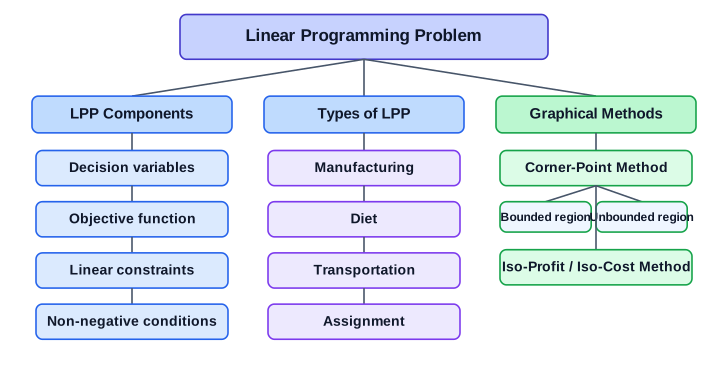
Drawn by us to help you understand the concept clearly, and verified to make sure it's accurate. For exams, practice from your NCERT textbook's own diagram.
Concept map of the chapter.