Economics · Ch 9 — Indian Economy on the Eve of Independence
Demographic Condition
Demographic Condition
Detailed information about the population of British India was first gathered through a census in 1881. Though it had limitations, it exposed the unevenness of population growth. From then on, a census was conducted every ten years.
Stages of demographic transition
- Before 1921, India was in the first stage of demographic transition.
- The second stage began after 1921.
- Even in this second stage, neither the total population nor its rate of growth was very high.
Poor social development indicators
- Overall literacy was below 16 per cent.
- Female literacy was a negligible seven per cent or so.
- Public health facilities were either absent for large sections of people or, where present, badly inadequate. As a result, water-borne and air-borne diseases were widespread and deadly.
Mortality and life expectancy
- The overall death rate was very high.
- The infant mortality rate was alarming — about 218 per thousand, against the present infant mortality rate of 33 per thousand.
- Life expectancy was extremely low — about 32 years, against the present life expectancy of 69 years.
Poverty …
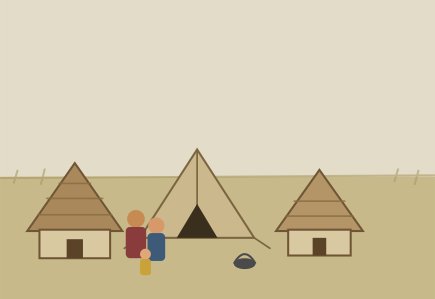
Drawn by us to help you understand the concept clearly, and verified to make sure it's accurate. For exams, practice from your textbook's own diagram.
Our own line-art recreation of the scene the NCERT chapter captions "A large section of India's population did not have basic needs such as housing" (Fig. 1.3) — a makeshift settlement of tents and thatched huts. Drawn fresh by us, not traced from the textbook photograph; it illustrates the widespread pov …