Organisation of Commerce and Management · Ch 9 — Financial Markets
Functions of Financial Market
9.1.1
Functions of Financial Market
Financial markets play an important role in the allocation of scarce resources in an economy by performing the following four important functions.
- Mobilisation of savings and channelling them into the most productive uses. A financial market facilitates the transfer of savings from savers to investors. By offering savers a choice of different investments, it helps to channel surplus funds into their most productive use.
- Facilitating price discovery. The forces of demand and supply establish the price of a commodity or service in any market. In the financial market, households are the suppliers of funds and business firms represent the demand. The interaction between them helps to establish a price for the financial asset being traded.
- Providing liquidity to financial assets. Financial markets make it easy to buy and sell financial assets, so that they can be converted into cash whenever required. Holders of assets can readily sell them through the mechanism of the financial market.
- Reducing the cost of transactions. Financial markets provide valuable information about the securities being traded. This saves the time, effort and money that buyers and sellers would otherwise spend in trying to find each other; the market is a common platform where they can meet. …
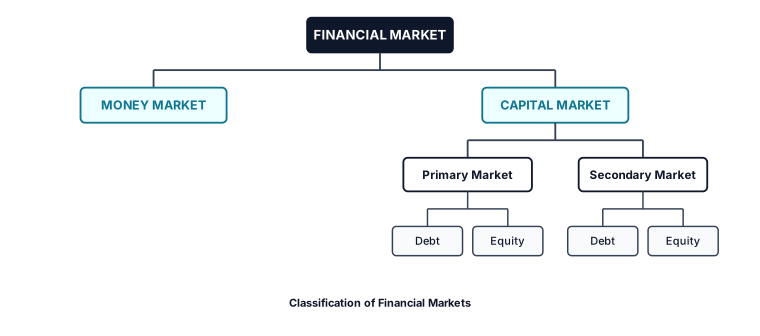
Figure 2Classification of Financial Markets — the financial market splits into the money market and the capital market, and the capital market into primary and secondary markets, each dealing in debt and equity
Drawn by us to help you understand the concept clearly, and verified to make sure it's accurate. For exams, practice from your textbook's own diagram.
Our own recreation of the book's classification chart. On the basis of the maturity of the instruments traded, the financial market is classified into the money market (short-term funds) and the capital market (long-term funds). The capital market is further divided into the primary market (new issues) and the secondary market (existing securities) …