Question of 16
Q.Draw a well labelled diagram of Human digestive system. What is the process of digestion of carbohydrate in human?
Jharkhand JacJAC Intermediate Board (1st Year) 2022Subjective· 5mImportance★★★★★
0% · 0/16 Questions
You're viewing a preview — the full solution, concept, methods & PYQ mapping are locked.
Start your 14-day free trial to unlock the full solution →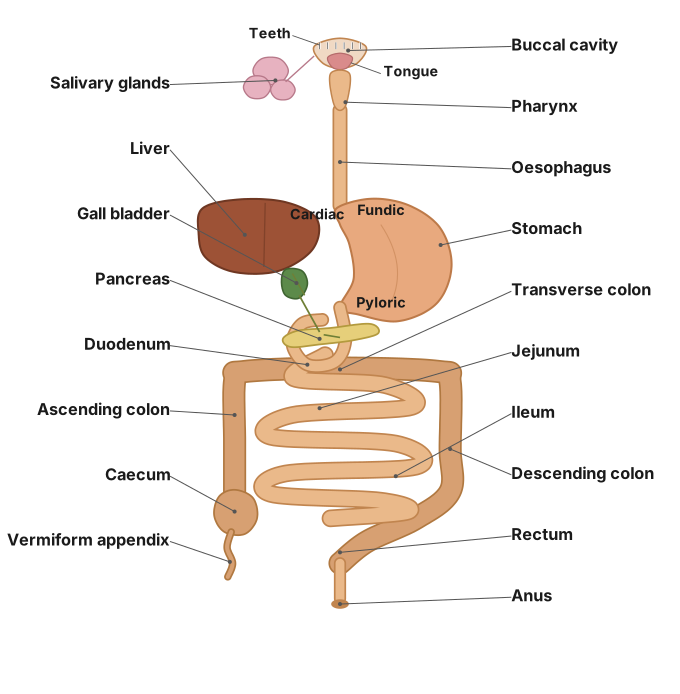
The human digestive system is one continuous tube (mouth to anus) with several accessory glands opening into it; the diagram's key parts are listed below in words. Carbohydrate digestion starts with salivary amylase in the mouth, pauses in the acidic stomach, resumes with pancreatic amylase in the duodenum, and finishes at the intestinal brush border, yielding absorbable monosaccharides.
Key features of the diagram (described, since it can't be drawn here):
- Buccal cavity — contains teeth (for mastication) and tongue; opens into the pharynx.
- Oesophagus — a muscular tube carrying food (by peristalsis) from the pharynx to the stomach.
- Stomach — a J-shaped bag with three regions: cardiac (near the oesophageal opening), fundic (the main body, richest in gastric glands), and pyloric (leading into the duodenum, guarded by the pyloric sphincter).
- Small intestine — the longest part, in three sections: duodenum (C-shaped, receives bile duct + pancreatic duct), jejunum, and ileum (where most absorption occurs, aided by villi and microvilli).
- Large intestine — caecum (with the vermiform appendix attached), colon (ascending, transverse, descending, sigmoid), and rectum, ending at the anus.
- Associated (accessory) glands, all connected by ducts rather than being part of the tube itself: salivary glands (parotid, sublingual, submandibular) opening into the buccal cavity; the liver, which produces bile stored in the gall bladder and delivered via the bile duct; and the pancreas, delivering pancreatic juice via the pancreatic duct — both the bile duct and pancreatic duct usually join and open into the duodenum.
Digestion of carbohydrates:
- Mouth: salivary amylase (ptyalin) in saliva acts on starch at near-neutral pH, breaking some of it down into maltose; this action stops once food reaches the acidic stomach (pepsin-favouring pH inactivates amylase).
- Stomach: essentially no further carbohydrate digestion occurs here — gastric juice has no significant carbohydrate-digesting enzyme. …
Unlock everything free for 14 days
- Full step-by-step solutions
- Concept-first explanations
- Methods, shortcuts & mistakes
- PYQ mapping + timed mock tests
Full access for 14 days. No credit card required.