Zoology · Ch 11 — Chemical Coordination and Integration
Thyroid Gland
Thyroid Gland
The thyroid gland has two lobes, one lying on each side of the windpipe (trachea). The two lobes are joined across the middle by a narrow bridge of connective tissue known as the isthmus, giving the gland its characteristic bilobed, butterfly-like shape.
Structure
Internally the gland is built from two components: follicles and the supporting stromal tissue between them. Each follicle is a small sac lined by follicular cells that surround a central cavity. These follicular cells are the working units of the gland — they manufacture the thyroid hormones.
Hormones secreted
The follicular cells produce two closely related hormones:
- Tetraiodothyronine, or thyroxine (T4)
- Triiodothyronine (T3)
Both contain iodine, and iodine from the diet is essential for these hormones to be made at their normal rate. If the diet is deficient in iodine, the gland cannot synthesise enough hormone.
In addition to T3 and T4, the thyroid also secretes a protein hormone called thyrocalcitonin (TCT), which helps regulate the level of calcium in the blood.
What the thyroid hormones do
The thyroid hormones (T3 and T4) have wide-ranging effects on body function:
- Basal metabolic rate: they are central to regulating the body's basal metabolic rate — the resting rate at which the body uses energy.
- Red blood cell formation: they support the production of red blood cells.
- Metabolism of nutrients: they control the metabolism of carbohydrates, proteins and fats.
- Water and electrolyte balance: they also influence the maintenance of the body's water and electrolyte balance.
Disorders of thyroid function
Hypothyroidism (too little hormone): A shortage of dietary iodine leads to reduced hormone production. The gland enlarges as a result, producing a swelling in the neck commonly called goitre.
Hypothyroidism during pregnancy is especially serious because it disturbs the growth and maturation of the developing baby. This can cause cretinism, a condition marked by stunted growth, along with mental retardation, low intelligence quotient, abnormal skin, deaf-mutism and similar defects. In adult women, hypothyroidism can also make the menstrual cycle irregular. …
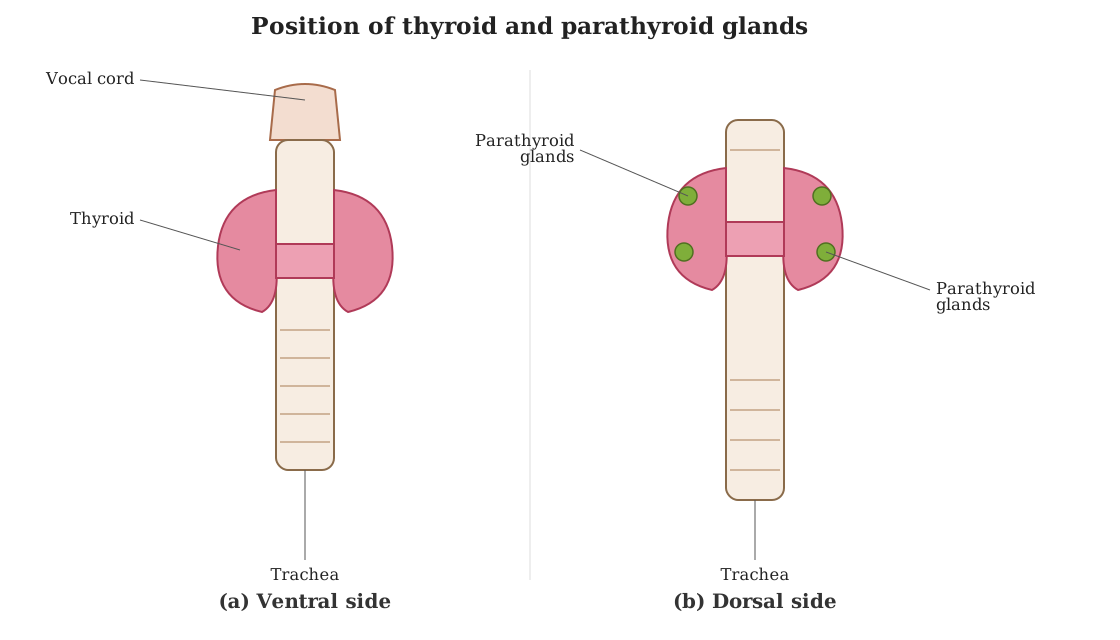
Drawn by us to help you understand the concept clearly, and verified to make sure it's accurate. For exams, practice from your textbook's own diagram.
This figure shows where the thyroid and parathyroid glands sit in the neck. The thyroid is a bilobed gland: its two lobes lie on either side of the windpipe (trachea), just below the voice box (larynx), and are joined across the front by a bridge of tissue called the isthmus. Tucked against the back (posterior) surface of the thyroid lobes are four small parathyroid glands, arranged as two pairs. Seeing their positions together explains why the two glands are often discussed side by side even though they do very different jobs — the thyroid secretes the thyroid hormones (and calcitonin), while the parathyroids secrete …