Economics · Ch 9 — Indian Economy on the Eve of Independence
Infrastructure
Infrastructure
Under colonial rule some basic infrastructure — railways, ports, water transport, posts and telegraphs — did develop. But the real motive was never to give people basic amenities; it was to serve colonial interests.
Roads
- Roads built before the British were unsuited to modern transport.
- The roads the British built mainly moved the army within India and carried raw materials from the countryside to the nearest railway station or port for shipment to England and other profitable destinations.
- All-weather roads reaching rural areas were acutely short in supply, so villagers suffered terribly during natural calamities and famines.
Railways
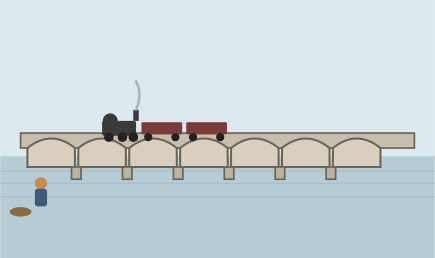
The British introduced railways in 1850, one of their most important contributions, and it affected the economy in two important ways:
Drawn by us to help you understand the concept clearly, and verified to make sure it's accurate. For exams, practice from your NCERT textbook's own diagram.
Our own line-art recreation of the archival photograph the NCERT chapter captions "First Railway Bridge linking Bombay with Thane, 1854" (Fig. 1.4). Drawn fresh by us, not traced from the textbook photograph; it marks the introduction of the railways in 1850, discussed in this section as one of British rule's most significant — if …
- On the one hand, it let people make long journeys, breaking geographical and cultural barriers.
- On the other hand, it promoted the commercialisation of agriculture, which undermined the self-sufficiency of India's village economies.
- The volume of exports certainly grew, but the benefits rarely reached the Indian people. Whatever social gains the railways brought were outweighed by the country's huge economic loss.
Drawn by us to help you understand the concept clearly, and verified to make sure it's accurate. For exams, practice from your NCERT textbook's own diagram.
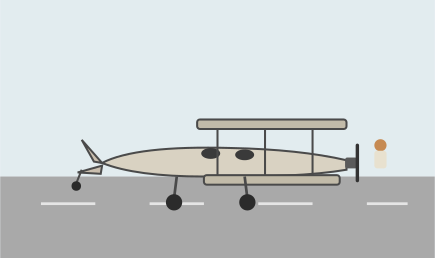
Our own line-art recreation of the archival photograph the NCERT chapter captions "Tata Airlines, a division of Tata and Sons, was established in 1932 inaugurating the aviation sector in India" (Fig. 1.5). Drawn fresh by us, not traced from the textbook photograph; it illustrates the beginnings of India's aviation infrastructure alongside …
Work This Out
There is a perception, still going around, that in many ways the British administration in India was quite beneficial. This perception needs an informed debate. How would you look at it? Argue it out in your class — 'Was the British Raj good for India'?
Water transport, telegraph and post …