Biology · Ch 8 — Microbes in Human Welfare
Microbes in Production of Biogas
Microbes in Production of Biogas
Biogas is a mixture of gases — predominantly methane — produced by the microbial breakdown of organic matter in the absence of oxygen. The process is called anaerobic digestion, and it is carried out by a specific group of bacteria known as methanogens.
Methanogens are found naturally in the gut of ruminant animals (cattle, buffalo) and in anaerobic sludge. The most common methanogen used in biogas plants is Methanobacterium. These bacteria produce methane from the breakdown products of cellulose and other organic compounds.
The biogas produced is composed of methane (about 50–70%), carbon dioxide, and traces of hydrogen sulphide and other gases. Methane is the combustible component that makes biogas a useful fuel.
The raw material for biogas production is any organic waste — cattle dung, plant residues, sewage, agricultural waste, or food waste. In rural India, cattle dung is the most common feedstock. A typical biogas plant (also called a gobar gas plant) consists of a concrete tank (the digester) buried underground. The tank has an inlet for feeding the slurry (dung mixed with water) and an outlet for the spent slurry (the residue).
Inside the digester, anaerobic conditions are maintained. The methanogens act on the organic matter, producing biogas. The gas collects in a dome or a floating gas-holder at the top of the tank. From here, it is piped to the point of use — typically a kitchen stove for cooking or a lamp for lighting. The spent slurry that comes out of the outlet is a rich organic manure, often better than fresh dung because the digestion process has already broken down much of the organic matter into forms more readily available to plants.
Biogas technology serves a dual purpose: it provides a clean, renewable fuel (reducing dependence on firewood and kerosene) and produces a high-quality fertiliser as a by-product. It also helps in the hygienic disposal of cattle dung and other organic wastes.
The key steps in the process are:
- Collection and mixing: Cattle dung is mixed with an equal quantity of water to form a slurry.
- Anaerobic digestion: The slurry is fed into the digester. Methanogenic bacteria break down the organic matter over a period of several days to weeks, depending on temperature and the type of waste.
- Gas collection: The biogas rises and is trapped in the gas-holder.
- Slurry removal: The digested slurry (effluent) is removed from the outlet and used as manure. …
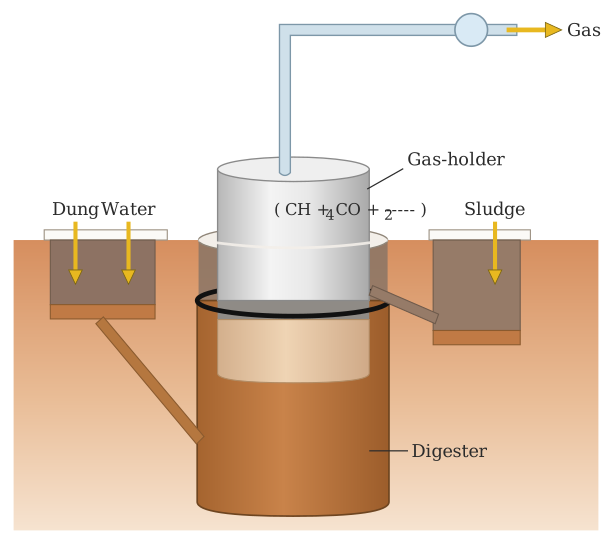
Drawn by us to help you understand the concept clearly, and verified to make sure it's accurate. For exams, practice from your textbook's own diagram.
A typical biogas plant is a simple but clever system built around a single large, deep concrete tank — the digester — sunk into the ground. This tank holds the slurry, a semi-liquid mixture of cattle dung and water. The slurry is fed into the tank through an inlet pipe that slopes down from ground level into the digester. Once inside, the slurry is left undisturbed so that anaerobic (oxygen-free) microbes can break down the organic matter.
The key moving part sits on top of the digester: a floating gas-holder cover, often made of steel or a strong plastic. This cover is not fixed — it rises and falls like a bell. As microbes in the slurry produce biogas (mainly methane and carbon dioxide), the gas collects under the cover, pushing it upward. The higher the cover rises, the more gas has been produced. A gas outlet pipe runs from the top of this cover to nearby houses, carrying the biogas for cooking or lighting.
At the opposite end of the digester from the inlet, there is an outlet for the spent slurry — the material left after microbial digestion. This outlet is positioned so that as fresh slurry is added through the inlet, an equal volume of digested slurry overflows out. The spent slurry is not waste; it is a rich, odourless fertiliser that farmers collect and spread on fields.
The figure shows no pumps or moving parts inside the tank — the entire process relies on gravity (slurry flows in and out) and the pressure of the gas itself to lift the cover. This makes the plant cheap to build and maintain, ideal for rural India. …