Business Studies · Ch 13 — Entrepreneurship Development
The Process of Entrepreneurship Development
The Process of Entrepreneurship Development
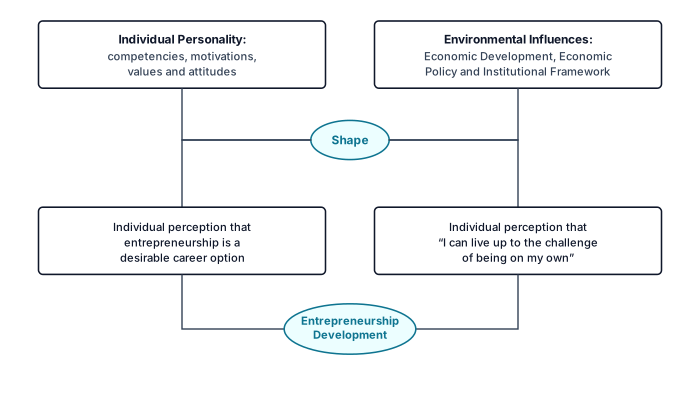
Entrepreneurship does not emerge spontaneously. It is the outcome of a dynamic process of interaction between a person and his or her environment. Ultimately the choice of entrepreneurship as a career lies with the individual — but the individual must see it as both a desirable and a feasible option. It is therefore necessary to look at both the factors in the environment and the factors in the individual's own perception of desirability and feasibility.
Drawn by us to help you understand the concept clearly, and verified to make sure it's accurate. For exams, practice from your textbook's own diagram.
Our own recreation of the book's model of entrepreneurship development. The individual personality (competencies, motivations, values and attitudes) and the environmental influences (economic development, economic policy and the institutional framework) together shape two perceptions in the individual — that entrepreneurship is a desirable career option, and that 'I can live up to the challenge of being on my own' (its feasibility). …
Startup India Scheme
The Startup India Scheme is a flagship initiative of the Government of India, whose objective is to build a strong ecosystem for nurturing innovation and startups so as to drive sustainable economic growth and generate large-scale employment. The scheme specifically aims to trigger an entrepreneurial culture and inculcate entrepreneurial values in society, create awareness about the process of entrepreneurship especially among the youth, encourage more dynamic startups by motivating educated youth, scientists and technologists, support the early (pre-startup, nascent and early post-startup) phases of entrepreneurship, and broaden the entrepreneurial base by meeting the needs of under-represented groups such as women, socially and economically backward communities, and the Scheduled Castes and Scheduled Tribes.
Its main action points include the simplification and hand-holding of compliance for startups, a single-point Startup India Hub for knowledge exchange and access to funding, legal support and fast-tracking of patent examination (through the Scheme for Startups Intellectual Property Protection), an easy exit in the event of business failure, harnessing the private sector to set up incubators in public-private-partnership mode, and a tax exemption on the profits of startup initiatives for a period of three years.
Ways to fund a startup
In addition to government plans that offer startup capital and bank loans, a startup can be funded in the following ways:
- Bootstrapping (self-financing). Stretching one's own savings and resources; a good option only when the initial requirement is small, and one that investors later count in the entrepreneur's favour.
- Crowdfunding. The pooling of resources by a group of people for a common goal, increasingly done through online platforms that help startups meet their funding needs.
- Angel investment. Individuals with surplus cash who invest in promising early startups and often also offer mentoring and advice. …