Question of 90
Q.Draw a neat labelled diagram of the structure of typical bisexual flower.
Nagaland NbseNagaland Board of School Education 2018Subjective· 3mImportance★★★★★
0% · 0/90 Questions
You're viewing a preview — the full solution, concept, methods & PYQ mapping are locked.
Start your 14-day free trial to unlock the full solution →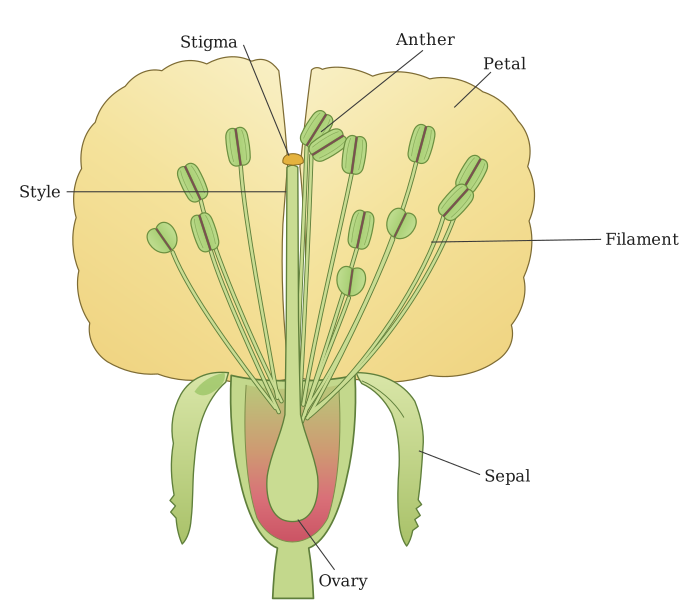
A bisexual flower has four whorls on the thalamus, from outside to inside: calyx, corolla, androecium and gynoecium — the latter two being the reproductive whorls.
A typical bisexual (or "complete"/"perfect") flower possesses both the male and female reproductive structures in the same flower, and typically shows four distinct whorls arranged concentrically on a receptacle (thalamus):
- Calyx (outermost whorl): composed of sepals, usually green, whose main function is protection of the flower bud.
- Corolla: composed of petals, usually brightly coloured, which attract pollinators (in insect-pollinated flowers).
- Androecium (male reproductive whorl): composed of stamens, each consisting of a slender filament bearing a terminal anther (typically bilobed, each lobe with two microsporangia/pollen sacs) where pollen grains (microspores) are produced. …
Unlock everything free for 14 days
- Full step-by-step solutions
- Concept-first explanations
- Methods, shortcuts & mistakes
- PYQ mapping + timed mock tests
Full access for 14 days. No credit card required.