Q.Draw the block diagram of a receiver of AM radio wave. Explain each of the components used.
You're viewing a preview — the full solution, concept, methods & PYQ mapping are locked.
Start your 14-day free trial to unlock the full solution →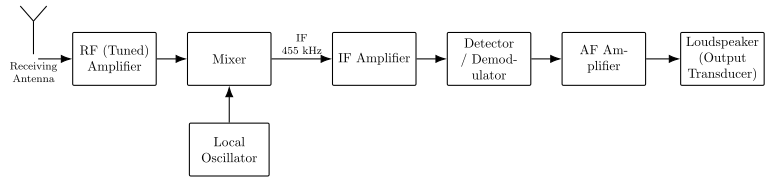
A receiver picks up the weak modulated RF signal, selects/amplifies it, strips off the carrier (detection), amplifies the recovered audio, and converts it back to sound.
The essential elements of a simple AM (amplitude-modulated) radio receiver, in block-diagram form:
1. Receiving Antenna: Intercepts the electromagnetic (radio) wave broadcast by the transmitter and converts it into a small oscillating electrical (RF) signal, containing signals from many different stations/frequencies simultaneously.
2. RF (Tuned) Amplifier: A tuned circuit (variable capacitor/inductor combination) selects the particular carrier frequency corresponding to the desired station (rejecting others), and amplifies this weak selected RF signal, since the received signal is typically very weak.
…
Unlock everything free for 14 days
- Full step-by-step solutions
- Concept-first explanations
- Methods, shortcuts & mistakes
- PYQ mapping + timed mock tests
Full access for 14 days. No credit card required.