Physical Education · Ch 3 — Yoga
Sheetkari Pranayama
Sheetkari Pranayama
The word "Sheetkari" is made of two parts — "Sheet" meaning coolness and "Kari" meaning which arises — so it literally means the "hissing breath". In this technique a snake-like hissing sound is made while breathing in through the mouth, which is why it is also known as the hissing breath. Sheetkari is very helpful in keeping the mind and body calm and cool.
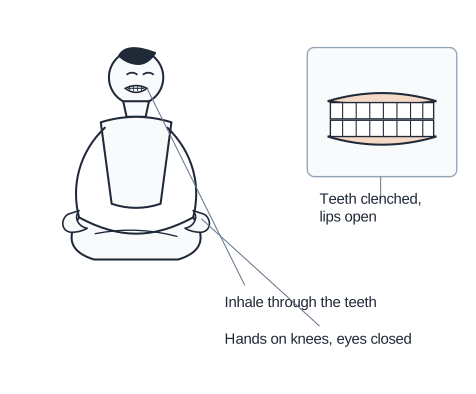
Drawn by us to help you understand the concept clearly, and verified to make sure it's accurate. For exams, practice from your textbook's own diagram.
A person sits cross-legged with a straight back and the hands resting on the knees in jnana mudra, the eyes closed. The mouth is open with the upper and lower teeth clenched together and the lips parted, showing the position in which cool air is drawn in acros …
Technique
- Sit in Padmasana or any comfortable asana, place the hands on the knees in Jnana Mudra, and close the eyes.
- Touch the palate with the tongue.
- Close both jaws with the teeth tightly pressed against each other, keeping the lips open.
- Draw in air through the mouth with a hissing sound ("Siii—"). Retain the breath for as long as you can, pressing the chest against the sternum (chin lock) and simultaneously pulling the rectum muscles (anal lock).
- Exhale slowly through both nostrils, releasing the chin lock and the anal lock.
Benefits
- It quenches thirst and appeases hunger, and cools the body system.
- It destroys gulma (chronic dyspepsia), spleen trouble, inflammation of various chronic diseases, fever, indigestion, bilious disorders and phlegm.
Precaution
- Those suffering from cold, cough or tonsillitis should not practise this pranayama, and, being a cooling breath, it is best avoided for long durations in cold weather.