Physical Education · Ch 7 — Physiology and Injuries in Sports
Physiological Changes Due to Ageing
Physiological Changes Due to Ageing
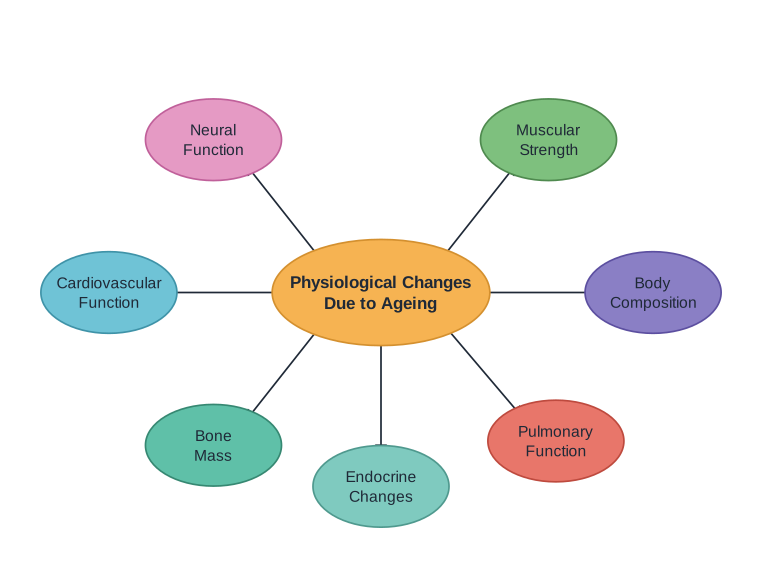
Ageing is an inevitable and highly complex, multifactorial process marked by the progressive degeneration of the body's organ systems and tissues. It is shaped largely by genetics but also influenced by a wide range of environmental factors such as diet, exercise and exposure to micro-organisms and pollutants. Ageing brings about several physiological changes, summarised in the diagram below and explained afterwards.
Drawn by us to help you understand the concept clearly, and verified to make sure it's accurate. For exams, practice from your textbook's own diagram.
A radial hub-and-spoke diagram. A central orange ellipse reads 'Physiological Changes Due to Ageing', with arrows radiating out to seven surrounding coloured ellipses: Neural Function, Muscular Strength, Body Composition, Cardiovascular Function, Bone Ma …
Muscular strength — Muscular strength is the maximal force a muscle or muscle group can produce. Men and women usually reach their highest strength levels between the ages of 20 and 40, when the muscle's cross-sectional area is greatest. Concentric strength then declines, slowly at first and more rapidly after middle age, while eccentric strength begins to fall later and more gradually. Strength loss starts later in women than in men. The main cause is a 40 to 50 per cent reduction in muscle mass between the ages of 25 and 80, from the atrophy of muscle fibres and the actual loss of motor units — a decline seen even in healthy, active people.
Neural function — A nearly 40 per cent fall in the number of spinal-cord axons and a 10 per cent fall in nerve-conduction velocity reflect the cumulative effect of ageing on the central nervous system. These changes contribute to the age-related decline in neuromuscular performance, slowing reaction and movement times. Ageing most strongly affects the time needed to detect a stimulus and process it into a response.
Endocrine changes with ageing — The endocrine system is made up of a host gland, tiny quantities of chemical messengers (hormones) and a target or receptor organ. With age, about 40 per cent of people aged 65 to 75, and 50 per cent of those over 80, develop impaired glucose tolerance, which can lead to Type-2 diabetes. Thyroid dysfunction — mainly a reduced release of thyroid-stimulating hormone (thyrotropin) and lower output of thyroxine — is common in the elderly and lowers glucose metabolism and protein synthesis. The mean pulse amplitude, duration and secreted fraction of growth hormone also fall gradually, a condition called somatopause.
Pulmonary function — Mechanical constraints on the lungs increase with age, causing a deterioration in both static and dynamic measures of lung function. Pulmonary ventilation and gas-exchange kinetics during the shift from rest to sub-maximal exercise also slow considerably.
Cardiovascular function — Cardiovascular function and aerobic capacity do not escape ageing. Because maximum heart rate falls, maximum cardiac output usually decreases with age in trained and untrained people alike, and reduced peripheral blood-flow capacity accompanies the loss of muscle mass. Notably, a sedentary lifestyle causes losses in functional capacity at least as great as ageing itself. …