Economics · Ch 16 — Comparative Development Experiences of India and Its Neighbours
Indicators of Human Development
16.5
Indicators of Human Development
Human development indicators measure how well growth translates into people's well-being, and here the three countries differ sharply.
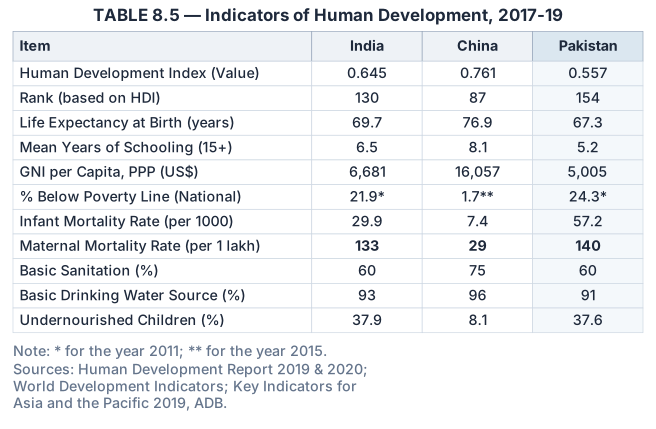
Table table-8.5Table 8.5 — Some Selected Indicators of Human Development, 2017-2019: HDI value and rank, life expectancy, schooling, GNI per capita, poverty, infant and maternal mortality, sanitation, drinking water and undernourishment, for India, China and Pakistan.
| Item | India | China | Pakistan |
|---|---|---|---|
| Human Development Index (Value) | 0.645 | 0.761 | 0.557 |
| Rank (based on HDI) | 130 | 87 | 154 |
| Life Expectancy at Birth (years) | 69.7 | 76.9 | 67.3 |
| Mean Years of Schooling (% aged 15+) | 6.5 | 8.1 | 5.2 |
Where each country stands
- On most indicators China is clearly ahead of both India and Pakistan — whether income measures like GNI per capita, health measures such as mortality rates and access to sanitation, or the extent of malnourishment.
- China's Human Development Index value and rank are the highest of the three, and Pakistan's the lowest, with India in between.
- China has done far better than both India and Pakistan in cutting the proportion of people below the poverty line — only about 1.7 per cent of its population falls below the poverty line, against roughly 22 per cent in India and 24 per cent in Pakistan; China also leads on basic sanitation access, at 75 per cent, against 60 per cent each in India and Pakistan.
- India and Pakistan have struggled badly with maternal mortality: for every one lakh live births only about 29 women die in China, against 133 in India and 140 in Pakistan.
- On access to at least basic drinking water, all three report covering most of their population.
A caution about these indicators …