Physical Education · Ch 2 — Olympic Value Education
The Olympic Symbol
The Olympic Symbol
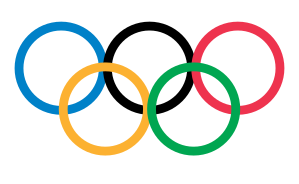
The Olympic symbol is the five interlocked rings of equal proportions, in five different colours. The colour sequence of the rings, from left to right, is blue, yellow, black, green and red; the blue, black and red rings are placed on the top, and the yellow and green rings at the bottom.
Drawn by us to help you understand the concept clearly, and verified to make sure it's accurate. For exams, practice from your NCERT textbook's own diagram.
The five interlaced Olympic rings arranged in two rows: three rings on the top row coloured blue, black and red (left to right), and two rings on the bottom row coloured yellow and green, each lower ring interlocking with the two rings above it. The five rings together represent …
Origin
The symbol was designed by Baron Pierre de Coubertin in 1913. He first sketched the five interlaced rings by hand and had them printed in colour on the letterhead of the Olympic Review that same year; the IOC formally adopted the design in 1914, and it was flown for the first time on the Olympic flag at the 1920 Antwerp Games (covered in the next sub-section).
Meaning
The five rings reflect the union of the five continents - the Americas, Africa, Asia, Australia/Oceania and Europe - and the symbol stands for the unity of sportspersons from all continents at the Olympic Games, meeting in peaceful competition regardless of nationality. It is the single most recognised emblem of the Movement, appearing on the flag, at the venues, on the athletes' kit and on official Olympic documents.
The rings themselves are not tied to particular continents by colour - a common misunderstanding. It is the five interlaced rings together, against the flag's white background, that represent the five continents meeting as one; no single ring or colour stands for any one continent.