Physical Education · Ch 10 — Training & Doping in Sports
Concept and Classification of Doping
Concept and Classification of Doping
Doping is an athlete's use of prohibited drugs or prohibited methods to improve training and sporting results. It covers banned substances (such as steroids, stimulants, hormones, diuretics and narcotics), banned methods (such as blood transfusions or gene doping), and even refusing a drug test or tampering with doping controls. The International Olympic Committee (IOC) defines doping as the use of any method or substance that might harm the athlete in a quest to gain an unfair advantage over fellow competitors. (Training at altitude to raise the blood's oxygen-carrying ability is allowed; using a drug such as EPO to achieve the same result is not.)
According to the World Anti-Doping Agency (WADA), doping is the occurrence of one or more anti-doping rule violations (Articles 2.1-2.8 of the WADA Code). These are:
- presence of a prohibited substance or method;
- use or attempted use of a prohibited substance or method;
- refusing to submit to sample collection after being notified;
- failure to file the athlete's whereabouts after being notified;
- tampering with any part of the doping-control process;
- possession of a prohibited substance or method;
- trafficking a prohibited substance or method;
- administering (or attempting to administer) a prohibited substance or method to an athlete.
So doping is not only about using a banned substance or method, but about breaking any of these rules.
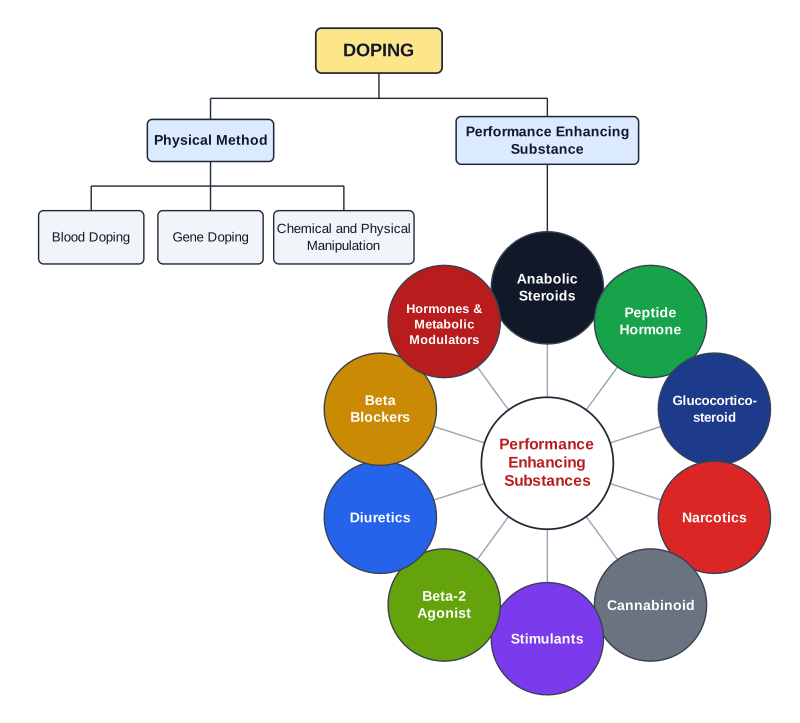
Drawn by us to help you understand the concept clearly, and verified to make sure it's accurate. For exams, practice from your NCERT textbook's own diagram.
Classification of doping. The top box 'DOPING' branches into two: 'Physical Method' and 'Performance Enhancing Substance'. 'Physical Method' leads to Blood Doping, Gene Doping, and Chemical & Physical Manipulation. 'Performance Enhancing Substance' leads to a group of substance classes: Anabolic Steroids, Peptide Hormone, Glucocorticosteroid, Narcotics, Cannabinoid, Stimulants, Beta-2 Ag …
WADA Prohibited List
WADA publishes an updated prohibited list each year, grouped as follows:
| Group | Class |
|---|---|
| Prohibited at all times | S0 Non-approved substances · S1 Anabolic agents · S2 Peptide hormones · S3 Beta-2 agonists · S4 Hormone & metabolic modulators · S5 Diuretics & masking agents · M1 Manipulation of blood & blood components · M2 Chemical & physical manipulation · M3 Gene & cell doping |
| Prohibited in-competition | S6 Stimulants · S7 Narcotics · S8 Cannabinoids · S9 Glucocorticoids |
| Prohibited in particular sports | P1 Beta-blockers |
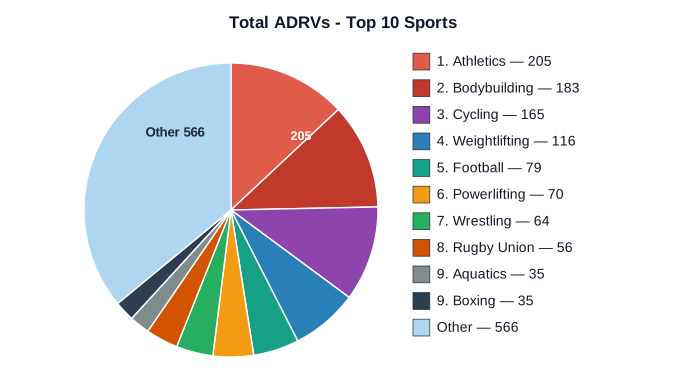
Drawn by us to help you understand the concept clearly, and verified to make sure it's accurate. For exams, practice from your NCERT textbook's own diagram.
Pie chart titled 'Total ADRVs - Top 10 Sports' showing the share of recorded anti-doping rule violations by sport: Athletics 205, Bodybuilding 183, Cycling 165, Weightlifting 116, Football 79, Powerlifting 70, Wrestling 64, Rugby Union …