Physical Education · Ch 3 — Yoga
Anulom-Vilom (Nadi Shodhana) Pranayama
Anulom-Vilom (Nadi Shodhana) Pranayama
Anulom-Vilom, also called Nadi Shodhana Pranayama, is one of the fundamental types of pranayama. It is called Anuloma-Viloma because "Viloma" means "produced in the reverse order" — the practice takes its name from the fact that the order of using the two nostrils for inhalation and exhalation is reversed from time to time.
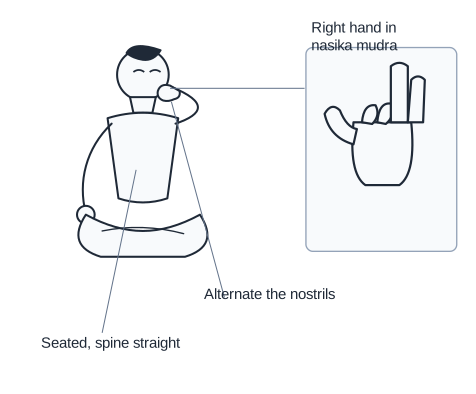
Drawn by us to help you understand the concept clearly, and verified to make sure it's accurate. For exams, practice from your NCERT textbook's own diagram.
A bare-torso person sits cross-legged with a straight spine and eyes closed. The right hand is raised to the nose with the fingers in nasika/jnana mudra so that the thumb can close the right nostril and the ring finger the left. A separate inset drawing of the right hand shows the mudra clearly: the index and middle fingers folded in, the thumb and …
Technique
- Sit in any comfortable asana, keeping the head and spine straight, with the eyes closed.
- Place the right hand in jnana mudra. Close the right nostril with the right thumb and inhale through the left nostril for 5 counts.
- After 5 counts, release the thumb from the right nostril and close the left nostril with the ring finger.
- Exhale through the right nostril for 10 counts, keeping the breath slow, deep and silent. Then inhale through the right nostril for 5 counts.
- Continue for 5 rounds of practice, or for 3 to 5 minutes, making sure that no sound is produced as the air passes through the nostrils.
Benefits
- Calms and steadies the mind, improves focus and concentration, and balances the left and right hemispheres of the brain.
- Strengthens the immune system.
- Helps manage hypertension.
- Provides sufficient oxygen for the functioning of every cell of the body.
- Removes waste products such as carbon dioxide and other toxic gases, so they do not remain in the bloodstream.
Why it balances the body
In yogic physiology, the left nostril is associated with the cooling, calming Ida nadi and the right nostril with the heating, energising Pingala nadi. By alternating the breath evenly between the two, Anulom-Vilom is said to balance these two channels and, correspondingly, the two hemispheres of the brain — which is consistent with the calming, focusing effect many practitioners report.