Physical Education · Ch 3 — Yoga
Dhauti
Dhauti
The word "Dhauti" means washing, so any cleansing kriya that involves washing may be called a Dhauti kriya. The form described here is Vamana Dhauti, also known as Kunjala (the "gesture of the elephant") — one of the six shat-karma purification methods of Hatha Yoga, used to clean the stomach and digestive tract.
Vamana Dhauti (Kunjala) — technique
- Drink tepid (lukewarm) water, as much as possible, filling the stomach completely.
- If desired, add a little common salt for taste.
- Insert three fingers into the throat and gently tickle it to bring the water back up (to vomit the water out).
- Repeat again and again until all the water is thrown out and the stomach feels light and clean.
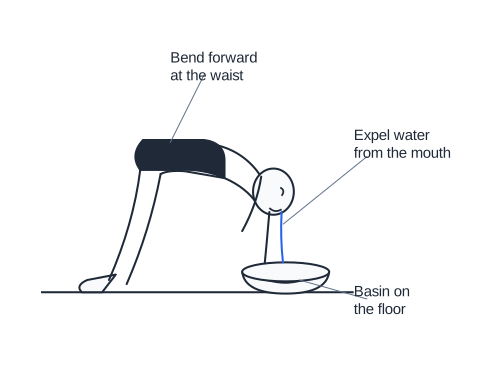
Drawn by us to help you understand the concept clearly, and verified to make sure it's accurate. For exams, practice from your NCERT textbook's own diagram.
A person stands bent forward at the waist, head lowered over a round basin on the floor. A stream of water is shown being expelled from the open mouth into the basin, depicting how the swallowed lukewarm water is brought back …
Why it works
Drinking a large volume of water and then immediately bringing it back up flushes the stomach in a way ordinary digestion never does — it carries out excess mucus, bile and undigested or fermenting food that can otherwise cause acidity, bloating and bad breath. This is the same cleansing logic behind all six Shat Karma kriyas: instead of waiting for the body's own slow processes, a deliberate, controlled action clears out what has accumulated.
Benefits
- It removes all the contents of the stomach, including excess secretions and undigested food.
- It removes gas, acidity and indigestion.
- It helps to cure cough and sore throat.
Vamana Dhauti is a strong internal practice and, like the other kriyas, should be learned and done under proper guidance and on a completely empty stomach.