Biology · Ch 2 — Biological Classification
Phycomycetes
Phycomycetes
Members of the Phycomycetes are found in aquatic habitats and on decaying wood in moist and damp places, or as obligate parasites on plants — that is, parasites that cannot survive without their host.
Structural and reproductive features:
- the mycelium is aseptate and coenocytic, meaning the thread-like hyphae lack cross walls and enclose a continuous, multinucleated cytoplasm
- asexual reproduction takes place by zoospores (motile) or by aplanospores (non-motile)
- these spores are produced endogenously in the sporangium, a sac-like structure in which they develop
- a zygospore is formed by the fusion of two gametes during sexual reproduction …
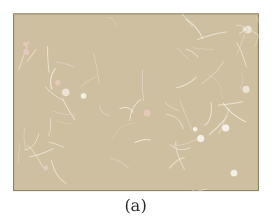
Drawn by us to help you understand the concept clearly, and verified to make sure it's accurate. For exams, practice from your NCERT textbook's own diagram.
This figure presents three fungi, each representing a different class. In (a) Mucor is a phycomycete, seen as a mass of fine, aseptate coenocytic threads (mycelium) that produce spores endogenously within sporangia. In (b) Aspergillus is an ascomycete; the drawing shows its conidiophore, a special upright mycelium bearing chains of asexual conidia produced exogenously at the tip. In (c) Agaricus, the common mushroom, is a basidiomycete with the familiar fruiting body called a basidiocarp — a stalk topped by an umbrella-like cap whose underside carries the basidia t …