Q.Write IUPAC names of the following:
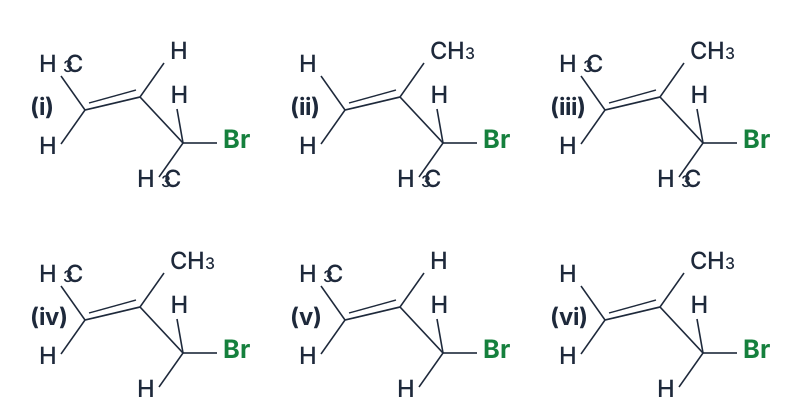
You're viewing a preview — the full solution, concept, methods & PYQ mapping are locked.
Start your 14-day free trial to unlock the full solution →Number the parent chain to give the double bond the LOWEST locant first; if both directions tie on that, the direction giving the lower locant SET to the substituents wins. Names: (i) 4-bromopent-2-ene,
(ii) 3-bromo-2-methylbut-1-ene,
(iii) 4-bromo-3-methylpent-2-ene,
(iv) 1-bromo-2-methylbut-2-ene,
(v) 1-bromobut-2-ene,
(vi) 3-bromo-2-methylprop-1-ene.
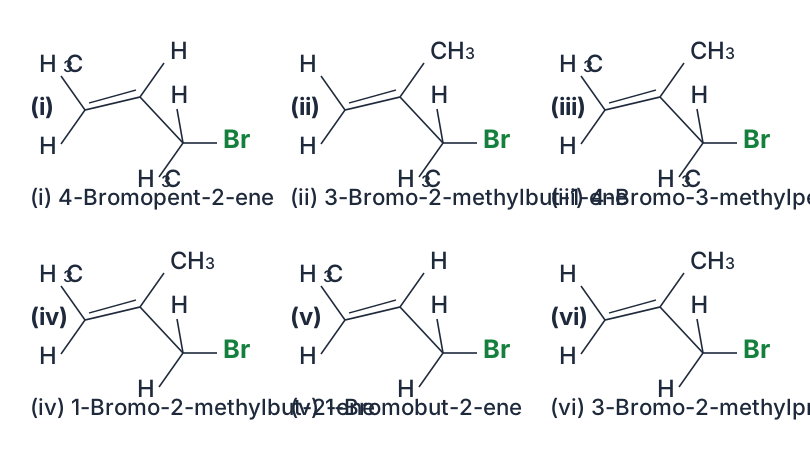
(i)
Numbering from the left gives the double bond locant 2; from the right it would be locant 3. Left wins outright (2 < 3, no tie). Br sits on C4: 4-bromopent-2-ene.
(ii)
The double bond is terminal, so it is always locant 1 from that end — no other numbering is possible. Methyl on C2, bromo on C3, alphabetical order (bromo before methyl): 3-bromo-2-methylbut-1-ene.
(iii)
Numbering from the left gives the double bond locant 2; from the right it would be locant 3. Left wins outright. Methyl on C3, bromo on C4: 4-bromo-3-methylpent-2-ene.
(iv)
Both numbering directions give the double bond the SAME locant (2) — a genuine tie, since this is only a 4-carbon chain. When the suffix locant ties, the win goes to whichever direction gives the LOWER locant SET to the substituents. Numbering from the end: Br@C1, methyl@C2 — set . Numbering from the end (as in the naive "closer to the double bond" reading): methyl@C3, Br@C4 — set . is lower, so Br takes C1: 1-bromo-2-methylbut-2-ene. …
Unlock everything free for 14 days
- Full step-by-step solutions
- Concept-first explanations
- Methods, shortcuts & mistakes
- PYQ mapping + timed mock tests
Full access for 14 days. No credit card required.