Physical Education · Ch 3 — Yoga as Preventive Measure for Lifestyle Disease
Tadasana
Tadasana
Tada means palm tree and asana means posture, so Tadasana is the palm-tree pose. In the final position the body is held straight and erect, just as a palm tree stands tall and upright. It is a standing asana and the starting position for many other standing poses. For managing obesity it is valuable because a single sustained upward stretch directly tackles two problems that come with excess weight — poor posture and sluggish digestion.
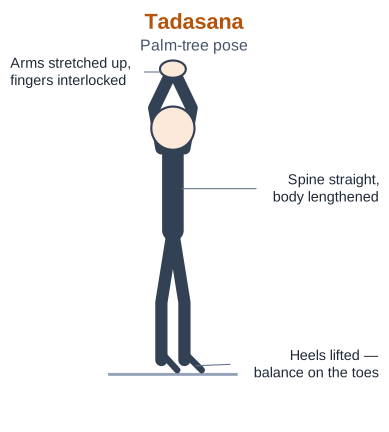
Drawn by us to help you understand the concept clearly, and verified to make sure it's accurate. For exams, practice from your textbook's own diagram.
Side-on view of the palm-tree pose: the body stands fully erect and stretched upward, heels lifted so the weight rests on the toes, and both arms reach straight overhead with the whole body lengthen …
Procedure
- Stand with the feet together, or about 10 cm apart for beginners, hands resting by the sides of the thighs.
- Distribute the body weight equally on both feet so the body is steady.
- Raise the arms over the head, interlock the fingers and turn the palms upward.
- Place the hands on top of the head.
- Fix the eyes on a point on the wall slightly above the level of the head, and keep the gaze fixed there throughout the asana.
- Inhale and stretch the arms, shoulders and chest upward.
- Raise the heels, coming up onto the toes.
- Stretch the whole body upward without losing balance or moving the feet.
- Hold the breath and the position for a few seconds.
- Breathing out, lower the heels and bring the hands back to the top of the head. This is one round.
Breathing awareness: synchronise the breath with the raising and lowering of the arms, and keep balance while stretching the whole body. Do not move the eyes from the fixed point, as that causes a loss of balance, and when returning, lower the heels gently without jerking.
Benefits
Tadasana supports weight management mainly by correcting posture and gently stimulating the abdomen:
- Strengthens the legs, knees, ankles, arms and chest.
- Stretches and opens the hips, groins, hamstrings and calves, as well as the shoulders, chest and spine — the upward pull counteracts the forward slump that excess abdominal weight tends to cause.
- Increases mental and physical equilibrium (balance). …