Biology · Ch 1 — Sexual Reproduction in Flowering Plants
Pollination
Pollination
The Core Idea: Why Pollination Exists
Flowering plants produce male and female gametes — the pollen grain and the embryo sac, respectively. Neither of these gametes can move on its own. For fertilisation to happen, they must be physically brought together. Pollination is the mechanism that achieves this: the transfer of pollen grains from the anther (where they are shed) to the stigma of a pistil.
Plants cannot move to find mates, so they have evolved an extraordinary range of adaptations to get pollen from one flower to another. They rely on external agents to carry the pollen. (See the in-text question on naming these agents, below.)
Kinds of Pollination
Pollination is classified into three types based on the source of the pollen.
1. Autogamy (Self-pollination within the same flower)
- Pollen is transferred from the anther to the stigma of the same flower.
- In a normal, open flower, complete autogamy is rare. It requires two conditions to be met simultaneously:
- Synchrony: Pollen release and stigma receptivity must occur at the same time.
- Proximity: The anthers and stigma must lie close to each other.
- Some plants get around this by producing two kinds of flowers:
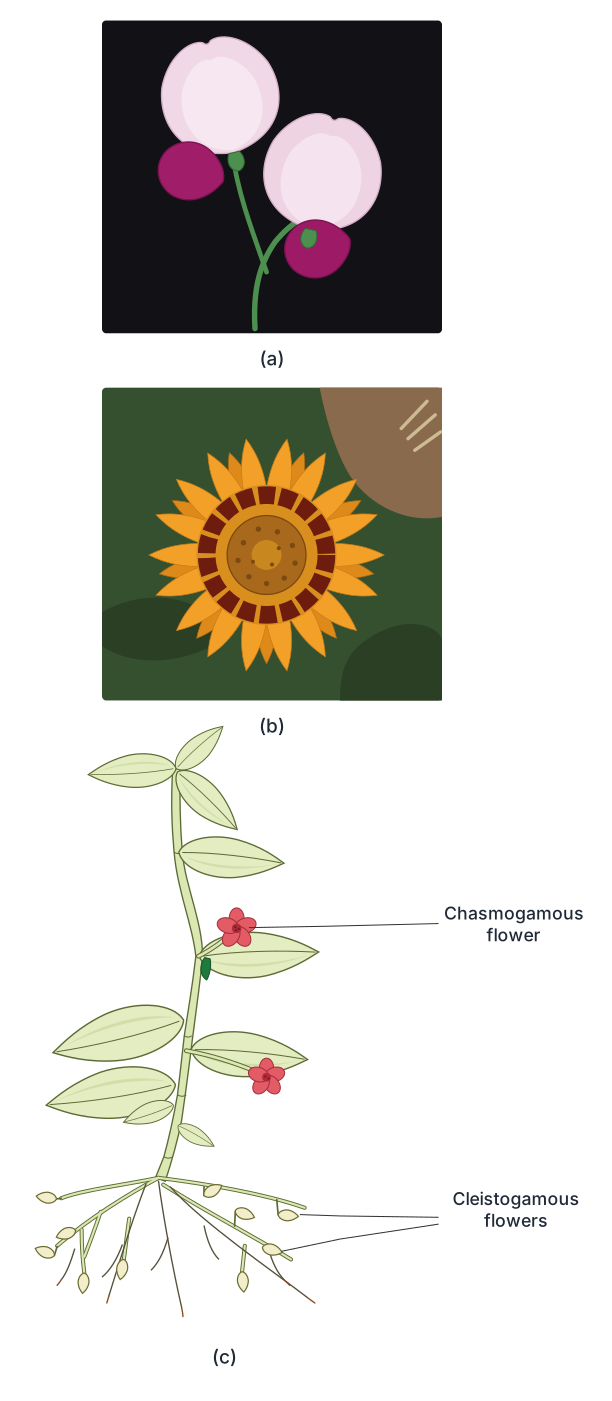
- Chasmogamous flowers: These are typical, open flowers with exposed anthers and stigma. They can be cross-pollinated.
- Cleistogamous flowers: These flowers never open. The anthers and stigma are already close together inside the bud. When the anthers dehisce (split open), pollen lands directly on the stigma. Because the flower never opens, there is zero chance of pollen from another flower landing on its stigma. Cleistogamous flowers are invariably autogamous. (See the in-text question on whether this is advantageous or disadvantageous, below.)
- Advantage: They produce assured seed-set even when no pollinators are available.
- Disadvantage: They produce no genetic variation — all offspring are clones of the parent.
- Examples: Viola (pansy), Oxalis, Commelina.
2. Geitonogamy (Pollination between flowers of the same plant)
- Pollen is transferred from the anther of one flower to the stigma of another flower on the same plant.
- Functionally, this is cross-pollination because a pollinating agent (wind, insect, etc.) is involved.
- Genetically, however, it is identical to autogamy — the pollen and ovules come from the same parent plant, so there is no new genetic material introduced.
3. Xenogamy (Cross-pollination between different plants)
- Pollen is transferred from the anther of one flower to the stigma of a flower on a different plant of the same species.
- This is the only type of pollination that brings genetically different pollen grains to the stigma. It is the source of genetic variation in the offspring.
Agents of Pollination
Plants use two abiotic (non-living) agents — wind and water — and one biotic (living) agent — animals. The vast majority of flowering plants rely on biotic agents. Only a small proportion use wind or water.
In both wind and water pollination, a pollen grain landing on a stigma is largely a matter of chance. To compensate for this uncertainty and the huge loss of pollen that never reaches a stigma, these plants produce enormous quantities of pollen — far more than the number of ovules they have.
1. Wind Pollination (Anemophily)
Wind pollination is the most common form of abiotic pollination.
Adaptations of wind-pollinated flowers:
- Pollen grains: Light, dry, and non-sticky so they can be carried easily by air currents.
- Stamens: Well-exposed, often hanging out of the flower, so pollen is easily shaken loose into the wind.
- Stigma: Large, often feathery or branched, to efficiently trap airborne pollen grains.
- Ovary: Often contains only a single ovule.
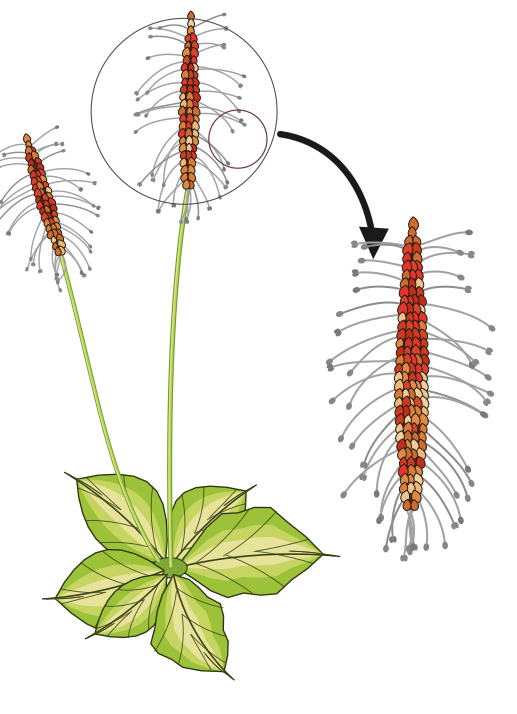
- Inflorescence: Flowers are often numerous and packed into a compact inflorescence (e.g., the tassel of a corn cob — what you see are the stigmas and styles waving in the wind).
- Common examples: Grasses, corn (maize).
2. Water Pollination (Hydrophily)
Water pollination is quite rare in flowering plants, limited to about 30 genera, mostly monocotyledons. (In contrast, lower plants like algae, bryophytes, and pteridophytes commonly use water to transport male gametes.)
Not all aquatic plants use water for pollination. In many, like water hyacinth and water lily, the flowers emerge above the water surface and are pollinated by insects or wind, just like land plants.
Two main strategies in water-pollinated plants:
-
Pollen on the water surface (e.g., Vallisneria):
- Female flowers reach the water surface on a long stalk.
- Male flowers or pollen grains are released onto the water surface.
- They are carried passively by water currents until some reach the female flower and its stigma.
-
Pollen underwater (e.g., seagrasses like Zostera):
- Female flowers remain submerged.
- Pollen grains are released directly into the water.
- The pollen grains in many such species are long and ribbon-like, which helps them be carried passively in water currents.
A key adaptation: In most water-pollinated species, pollen grains are protected from getting wet by a mucilaginous (slimy) covering.
(See the in-text question on why wind/water-pollinated flowers lack colour and nectar, below.)
3. Animal Pollination (Zoophily)
The majority of flowering plants use animals as pollinators.
Common pollinating agents: Bees, butterflies, flies, beetles, wasps, ants, moths, birds (sunbirds, hummingbirds), and bats. Among animals, insects — especially bees — are the dominant biotic pollinators. Even larger animals like some primates (lemurs), tree-dwelling rodents, and reptiles (gecko lizards, garden lizards) have been reported as pollinators in some species.
Adaptations of animal-pollinated flowers:
- Appearance: Often large, colourful, and fragrant. If individual flowers are small, they are clustered into a showy inflorescence.
- Rewards: Flowers must provide something to attract and sustain animal visits. The usual rewards are nectar and pollen grains.
- Specialised scents: Flowers pollinated by flies and beetles often produce foul odours (like rotting meat) to attract these animals.
- Sticky pollen: Pollen grains in animal-pollinated flowers are generally sticky, so they adhere to the animal's body.
- Mutualism: The animal visits the flower for a reward. In the process, its body picks up pollen from the anthers. When it visits another flower, the pollen on its body contacts the stigma, achieving pollination.
A special case — floral rewards as egg-laying sites:
- Amorphophallus: The tallest flower (about 6 feet high) provides a safe place for insects to lay eggs.
- Yucca and Yucca moth: This is a classic example of obligate mutualism. The moth deposits its eggs in the locule of the ovary of the Yucca flower. In return, the flower gets pollinated by the moth. The moth larvae hatch and develop as the seeds begin to develop. Neither species can complete its life cycle without the other.
(See the pollinator-observation activity, below.)
Not every animal that visits a flower is a pollinator. Some animals consume nectar or pollen without ever touching the anthers or stigma. These are called pollen/nectar robbers. Only visitors that come into contact with both the anthers and the stigma can bring about pollination.
Outbreeding Devices: How Plants Avoid Self-Pollination
Most flowering plants produce hermaphrodite (bisexual) flowers, making self-pollination a constant risk. Continued self-pollination leads to inbreeding depression — a reduction in fitness and vigour of the offspring. To encourage cross-pollination, plants have evolved several devices to discourage self-pollination.
-
Non-synchrony of pollen release and stigma receptivity:
- Either the pollen is released before the stigma becomes receptive (protandry).
- Or the stigma becomes receptive before the pollen is released (protogyny).
- This prevents autogamy.
-
Different positioning of anther and stigma:
- The anther and stigma are placed at different positions in the flower so that pollen cannot easily fall onto the stigma of the same flower.
- This prevents autogamy.
-
Self-incompatibility:
- This is a genetic mechanism. The pistil can recognise its own pollen (or pollen from the same plant) and actively reject it.
- Rejection occurs by inhibiting pollen germination on the stigma or by stopping pollen tube growth in the style. This prevents fertilisation by self-pollen.
-
Production of unisexual flowers:
- Monoecious plants (e.g., castor, maize): Male and female flowers are on the same plant. This prevents autogamy but does not prevent geitonogamy (pollen can still move between flowers on the same plant).
- Dioecious plants (e.g., papaya): Male and female flowers are on different plants. Each plant is either male or female. This prevents both autogamy and geitonogamy, forcing xenogamy.
Pollen-Pistil Interaction: The Dialogue
Pollination is just the delivery of pollen. What happens next is a dynamic, chemical conversation between the pollen grain and the pistil.
- Recognition: The pistil has the ability to recognise whether the pollen is of the right type (compatible — same species, not self-incompatible) or the wrong type (incompatible — different species, or self-pollen in a self-incompatible plant).
- Acceptance or Rejection:
- If the pollen is compatible, the pistil accepts it and promotes the events that lead to fertilisation.
- If the pollen is incompatible, the pistil rejects it by preventing pollen germination on the stigma or by stopping pollen tube growth in the style.
- The mechanism: This recognition is the result of a continuous dialogue mediated by chemical components of the pollen interacting with those of the pistil. Botanists have only recently begun to identify these components.
The path of a compatible pollen tube:
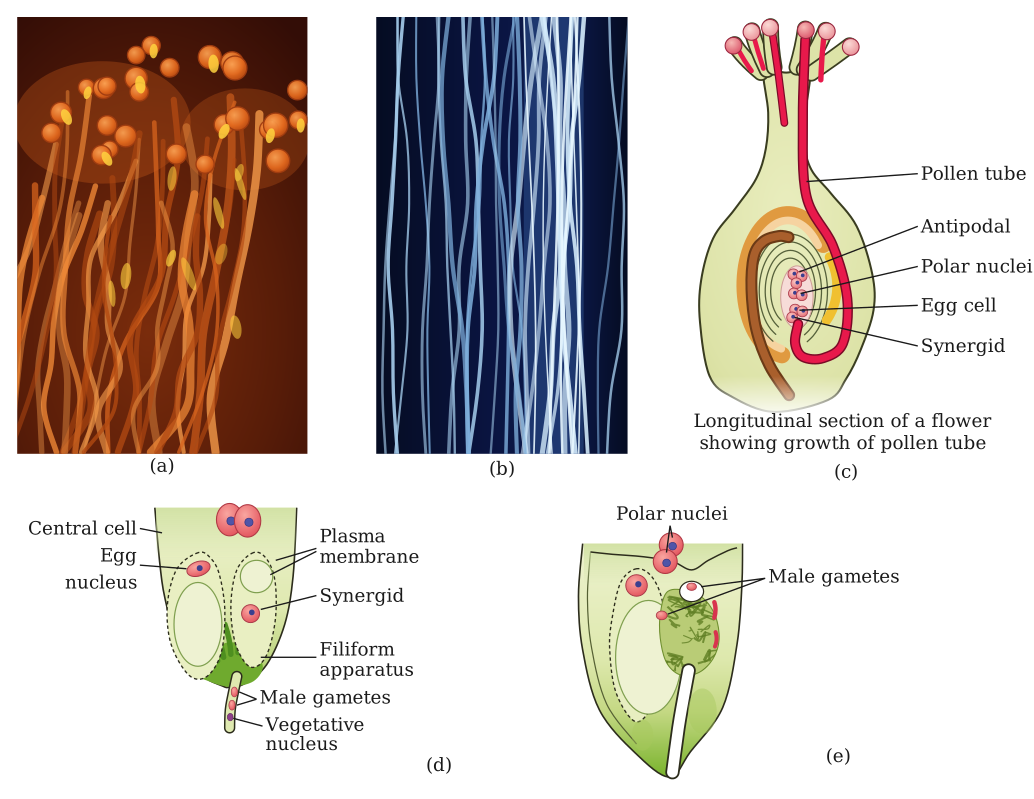
- The pollen grain lands on the stigma and germinates, producing a pollen tube that emerges through one of the germ pores.
- The contents of the pollen grain move into the pollen tube.
- The pollen tube grows through the tissues of the stigma and style, down into the ovary.
- It enters the ovule through the micropyle.
- It then enters one of the synergids (the two helper cells in the embryo sac) through a structure called the filiform apparatus. Recent studies show the filiform apparatus guides the pollen tube's entry. …
Drawn by us to help you understand the concept clearly, and verified to make sure it's accurate. For exams, practice from your textbook's own diagram.
Figure 1.9 has three panels, labelled (a), (b), and (c). Each panel shows a flower (or pair of flowers) with arrows indicating the path of pollen transfer.
Panel (a) shows a single flower. An arrow curves from the anther (the pollen-producing part) to the stigma of the same flower. This is autogamy — self-pollination within the same flower. The flower is open (chasmogamous), so the anthers and stigma are exposed. The arrow tells you that pollen lands on its own stigma.
Panel (b) shows two separate flowers, each on its own plant. An arrow goes from the anther of one flower to the stigma of the other flower. This is xenogamy — cross-pollination between different plants. The arrow makes clear that pollen is carried from one individual to another, which brings genetically different pollen to the stigma.
Panel (c) shows a cleistogamous flower. The key feature is that the flower is drawn as a closed bud — it never opens. Inside, the anther and stigma are shown lying very close together. There is no arrow needed because pollination happens automatically when the anther dehisces inside the closed bud and pollen grains directly contact the stigma. This is why cleistogamous flowers are invariably autogamous: no external agent can bring pollen in, and no pollen can escape.
The figure teaches the three kinds of pollination based on the source of pollen:
- Autogamy (panel a): pollen from the same flower.
- Xenogamy (panel b): pollen from a different plant. …
Drawn by us to help you understand the concept clearly, and verified to make sure it's accurate. For exams, practice from your textbook's own diagram.
Figure 1.10 shows a single wind-pollinated flower, drawn in a way that highlights its key adaptations for anemophily. The flower is small and inconspicuous — it lacks large, colourful petals because it does not need to attract insects. Instead, the stamens are well-exposed, hanging out of the flower on long, slender filaments. This arrangement ensures that when the anthers dehisce, the light, dry pollen grains are easily caught by air currents and carried away.
The stigma is the most prominent feature of the pistil. It is drawn as large and feathery, often with multiple branches or hair-like projections. This increases the surface area available to intercept pollen grains drifting in the wind. The style is usually short, so the stigma is positioned directly in the path of air movement. The ovary at the base of the flower is shown containing a single ovule — a common feature in wind-pollinated plants, since producing many ovules would be wasteful when pollination is a chance event.
The figure also shows that the flower is part of a compact inflorescence. Several such flowers are clustered together on the same stalk, which makes the whole group more likely to shed and receive pollen. The inflorescence is drawn as a dense spike or panicle, with each small flower contributing its exposed stamens and feathery stigma to the collective. …
Drawn by us to help you understand the concept clearly, and verified to make sure it's accurate. For exams, practice from your textbook's own diagram.
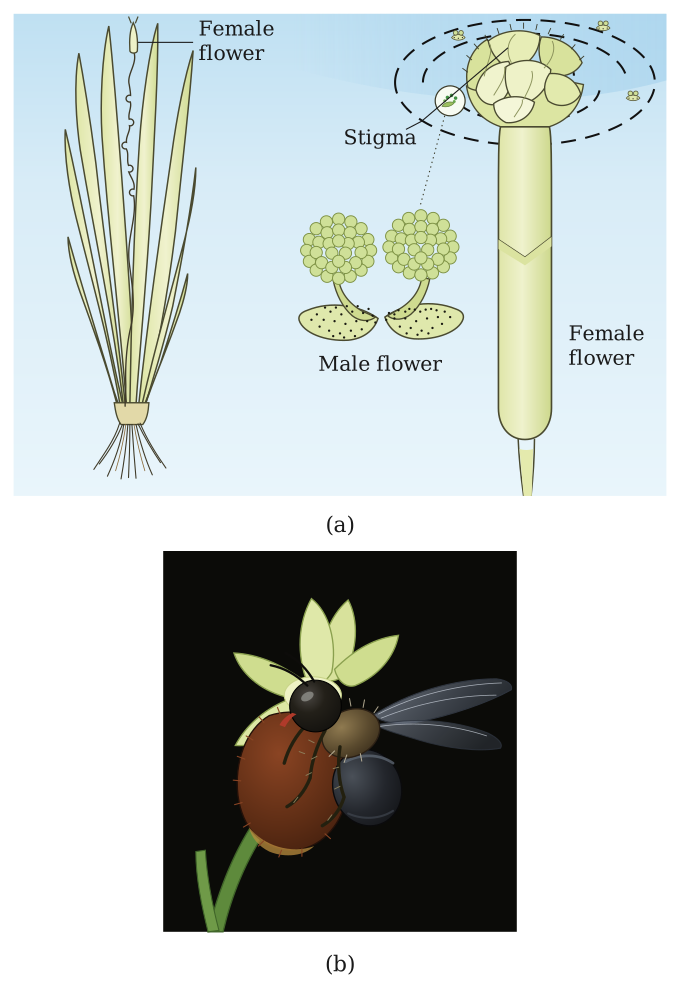
Figure 1.11 has two panels, (a) and (b), placed side by side to contrast two very different modes of pollination — one using water, the other using an insect.
Panel (a) shows Vallisneria, a common freshwater aquatic plant. The female flower is drawn at the water surface, attached to the plant below by a long, coiled stalk that has straightened to push the flower up. The male flowers, or the pollen grains released from them, are shown floating on the water surface as small dots or tiny flowers drifting passively. Arrows indicate the direction of water currents carrying these male units toward the female flower. The key point is that the female flower reaches the surface first; the male flowers are released later and float until they bump into the stigma of the female flower. No colourful petals, no nectar — the flower is small and inconspicuous because it does not need to attract animals.
Panel (b) depicts insect pollination (entomophily). A single large, showy flower is shown in side view, with prominent petals, visible anthers, and a stigma. An insect — typically a bee or a butterfly — is drawn visiting the flower. One arrow or visual cue shows the insect collecting nectar or pollen from the anthers; another arrow shows pollen grains sticking to the insect's body. A third arrow or the insect's movement toward the stigma indicates that when the insect visits another flower, some of these pollen grains will be deposited on the stigma. The flower is large, colourful, and likely fragrant — all features that attract animal visitors and reward them with nectar or pollen. …
Drawn by us to help you understand the concept clearly, and verified to make sure it's accurate. For exams, practice from your textbook's own diagram.
This figure follows the pollen tube's entire journey, from germination to the moment of fertilisation.
The main panel (left) covers steps (a)-(c): a pollen grain germinates on the stigma and grows a pollen tube down through the tissue of the style, carrying the two non-motile male gametes inside it. The tube enters the ovule through the micropyle and reaches the embryo sac.
Panel (d) zooms into that entry point: the pollen tube penetrates one of the two synergids and ruptures at its tip, releasing both male gametes into the synergid's cytoplasm. …