Physical Education · Ch 2 — Olympic Value Education
Organization and Setup of the International Olympic Committee
Organization and Setup of the International Olympic Committee
The powers of the International Olympic Committee are exercised through three organs: the Session, the IOC Executive Board, and the President.
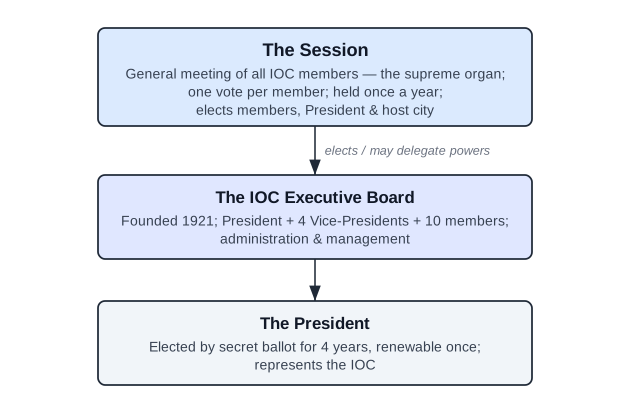
Drawn by us to help you understand the concept clearly, and verified to make sure it's accurate. For exams, practice from your textbook's own diagram.
An organisation chart showing the three organs of the IOC arranged top to bottom. Top box: 'The Session - general meeting of all IOC members; the supreme organ; one vote per member; held once a year; decides host city, programmes, elections'. Middle box: 'The IOC Executive Board - founded 1921; President + 4 Vice-Presidents + 10 members; responsible for administration and management'. Bottom box: 'The President - elected by secret ballot for 4 years, renewable once; represents the IOC'. Connecting lines show the Session as the sup …
The Session
The Session is the general meeting of the members of the IOC and is its supreme organ; its decisions are final. An ordinary Session is held once a year, and extraordinary Sessions may be convened by the President or on the written request of at least one-third of the members. Every member has one vote. The main decisions - such as choosing the host city, the sports programmes and electing new members - are taken in the Session. Its powers include: to adopt or amend the Olympic Charter; to elect the members of the IOC and the Executive Board (including the President and Vice-Presidents); to elect the host city of the Games; to approve the annual report and financial statements; to appoint the auditor; to grant or withdraw recognition of NOCs, IFs and other organisations; and to resolve all other matters assigned to it by the Charter. The quorum is half the total membership plus one; a two-thirds majority is needed to modify the Fundamental Principles of Olympism or the Rules of the Charter. The Session may delegate powers to the Executive Board.
The IOC Executive Board
The Executive Board was founded in 1921 to manage the affairs of the IOC. It consists of the President, four Vice-Presidents and ten members, elected by the IOC members in the Session by secret ballot. The Board takes overall responsibility for the administration and management of the IOC. Its duties include monitoring observance of the Charter, approving internal governance regulations, preparing the annual report and financial statements, recommending candidates for election to the IOC, supervising the procedure for selecting Games hosts, setting the agenda for Sessions, appointing (or dismissing) the Director General, safe-keeping all records, and issuing the IOC's legally binding regulations.