Biology · Ch 8 — Cell: The Unit of Life
Eukaryotic Cells
Eukaryotic Cells
Eukaryotic cells are the more complex of the two great cell types, marked above all by internal compartments and a properly organised nucleus.
Which organisms are eukaryotic
The eukaryotes take in all the protists, plants, animals and fungi.
Defining features
- Their cytoplasm is extensively compartmentalised by the presence of membrane-bound organelles, so that different activities are separated into their own enclosed spaces.
- They possess an organised nucleus enclosed by a nuclear envelope.
- They contain a variety of complex locomotory and cytoskeletal structures.
- Their genetic material is organised into chromosomes.
Plant cells versus animal cells
Eukaryotic cells are not all alike; plant and animal cells differ in several structures:
- Plant cells possess a cell wall, plastids and a large central vacuole — all of which are absent from animal cells.
- Animal cells possess centrioles, which are absent from almost all plant cells. …
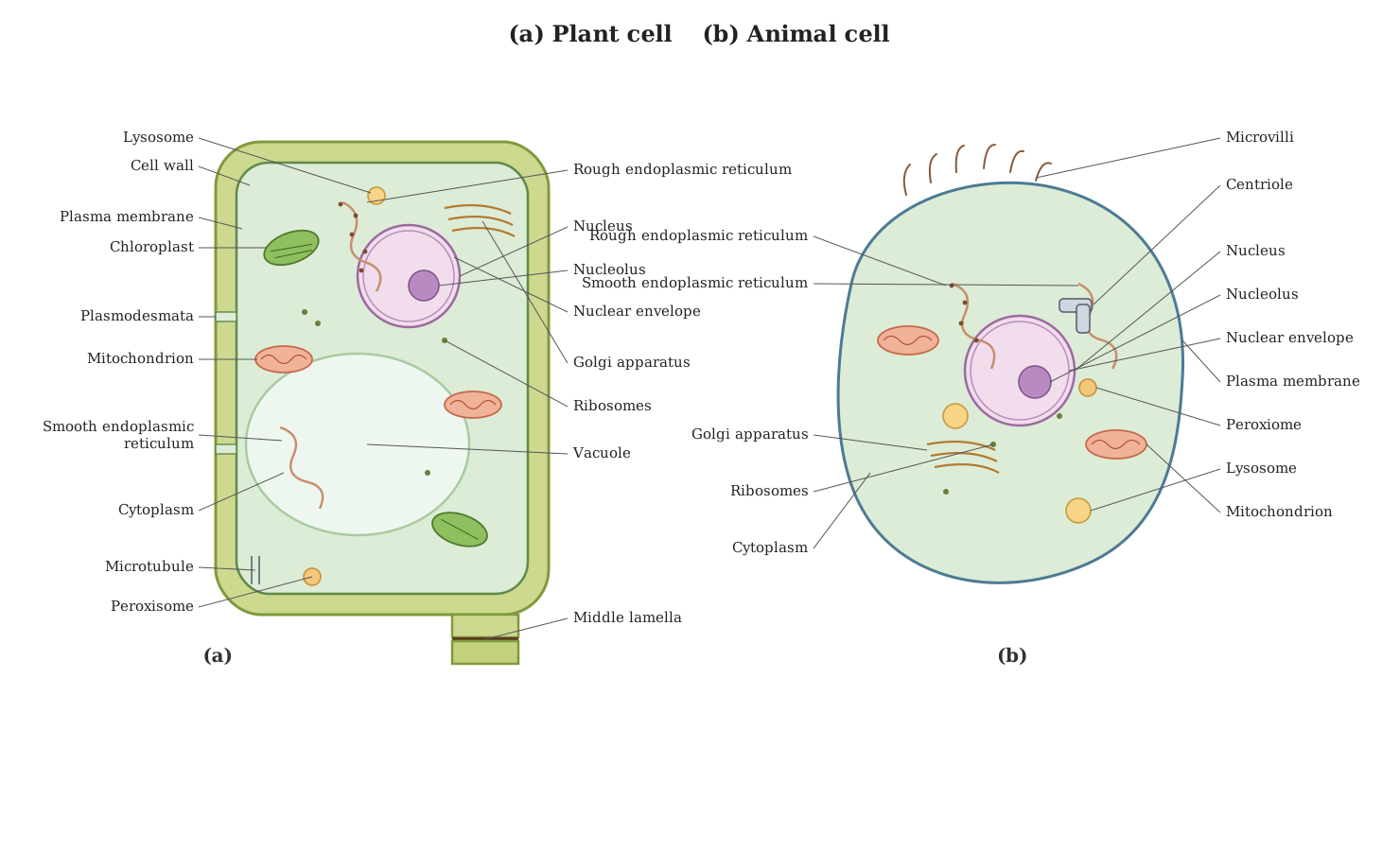
Drawn by us to help you understand the concept clearly, and verified to make sure it's accurate. For exams, practice from your textbook's own diagram.
This paired figure compares a plant cell with an animal cell so their shared and unique parts stand out. Both possess a plasma membrane, cytoplasm, a nucleus, endoplasmic reticulum, ribosomes, a Golgi complex and mitochondria, showing a common eukaryotic plan. The plant cell adds features the animal cell lacks: a rigid cell wall outside the membrane, a large central vacuole that stores sap and gives support, chloroplasts for photosynthesis, and plasmodesmata that connect neighbouring cells. The animal cell in turn carries a centrosome with its centrioles, which helps organise cell division, and lysosomes filled with digestive enzymes. The main idea is that plant …