Biology · Ch 13 — Plant Growth and Development
Growth
Growth
Growth ranks among the most fundamental and easily observed characteristics of any living organism. It can be defined as an irreversible, permanent increase in the size of an organ, of any of its parts, or even of a single cell. This growth is generally accompanied by metabolic activity — both the anabolic (building-up) and catabolic (breaking-down) kind — and this activity always draws on the organism's energy reserves. The expansion of a leaf is a clear example of true growth, since real metabolic work goes into producing the extra leaf tissue. By contrast, when a dry piece of wood is placed in water and swells, no such metabolic increase in living material is involved, so this sw …
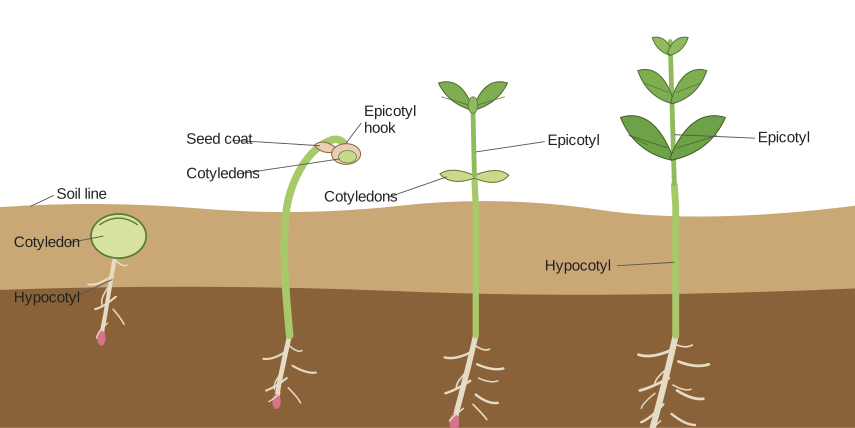
Drawn by us to help you understand the concept clearly, and verified to make sure it's accurate. For exams, practice from your textbook's own diagram.
This figure traces the stages by which a bean seed grows into a young seedling, which is the very first step in the life of the plant. In the earliest stage the seed lies just below the soil line, still enclosed by its seed coat, with the food-storing cotyledons and the embryonic root already emerging. As germination proceeds, the hypocotyl — the part of the axis below the cotyledons — elongates and arches upward, forming the epicotyl hook that shields the delicate tip as it pushes through the soil. Once above ground the hook straightens, the cotyledons are carried up and spread apart, and the epicotyl above them extends to bear the first true foliage leaves. Throughout the sequence the root system branches and spreads below the soil, anchoring the plant and absorb …