Biology · Ch 8 — Microbes in Human Welfare
Fermented Beverages
Fermented Beverages
The same yeast that makes bread rise — Saccharomyces cerevisiae, also called brewer’s yeast — is the workhorse behind alcoholic drinks. For thousands of years, people have used this microbe to turn fruit juices and malted cereals into beverages like wine, beer, whisky, brandy, and rum. The key process is fermentation: yeast converts sugars into ethanol (alcohol) and carbon dioxide. You may recall the metabolic pathway — under anaerobic conditions, yeast carries out alcoholic fermentation, producing ethanol and CO₂ as end products.
The type of alcoholic drink obtained depends on two factors: the raw material used, and whether the fermented broth is distilled or not.
Non-distilled beverages (wine and beer) are produced directly from the fermented liquid. Wine comes from fermented fruit juices (typically grapes), while beer is made from malted cereals (like barley). These drinks retain most of the flavour compounds from the original raw material and have a lower alcohol content.
Distilled beverages (whisky, brandy, rum) are made by heating the fermented broth to collect the alcohol vapour, which is then condensed. This concentrates the ethanol and removes many other components. The raw material determines the drink's character:
- Whisky is distilled from fermented malted cereals (usually barley, rye, or corn).
- Brandy is distilled from fermented fruit juices (most often grapes). …
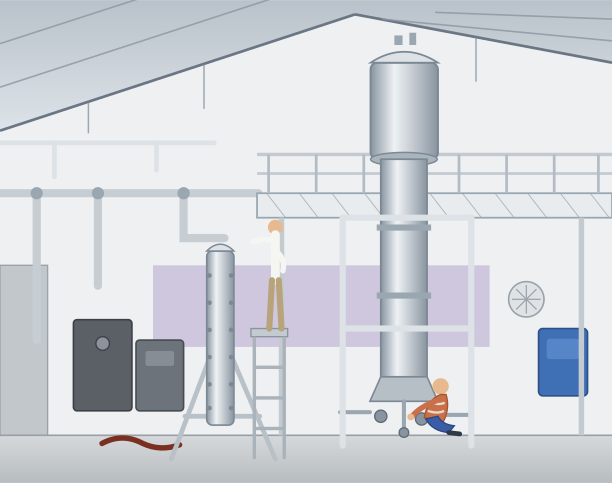
Drawn by us to help you understand the concept clearly, and verified to make sure it's accurate. For exams, practice from your textbook's own diagram.
The real NCERT photograph shows the interior of an industrial fermentation plant — several large, cylindrical stainless-steel tanks connected by pipework — with two workers visible, one standing on a ladder or platform near an elevated vessel and one crouching near equipment at ground level. It is not an empty, unstaffed facility. …