Biology · Ch 4 — Animal Kingdom
Classification of Animals
Classification of Animals
The fundamental characters examined so far — the level of organisation of the cells, the body symmetry, the number of germ layers, the nature of the coelom, the presence of segmentation, and the presence or absence of a notochord — are used together to sort the kingdom Animalia into its broad divisions. No single feature works alone; each phylum is characterised by a particular combination of these features, and it is that combination that fixes where a group belongs.
Using these shared fundamental features, the whole of Animalia is arranged into a broad classification, which the textbook sets out as a chart. Working down this scheme, the various phyla are separated from one another according to how they stand on each character — for instance, whether their cells reach only the cellular level or the full organ-system level, whether they are radially or bilaterally symmetrical, whether they are diploblastic or triploblastic, whether they are acoelomate, pseudocoelomate or coelomate, whether the body is segmented, and whether a notochord is present. (One point noted in the chart is that echinoderms ma …
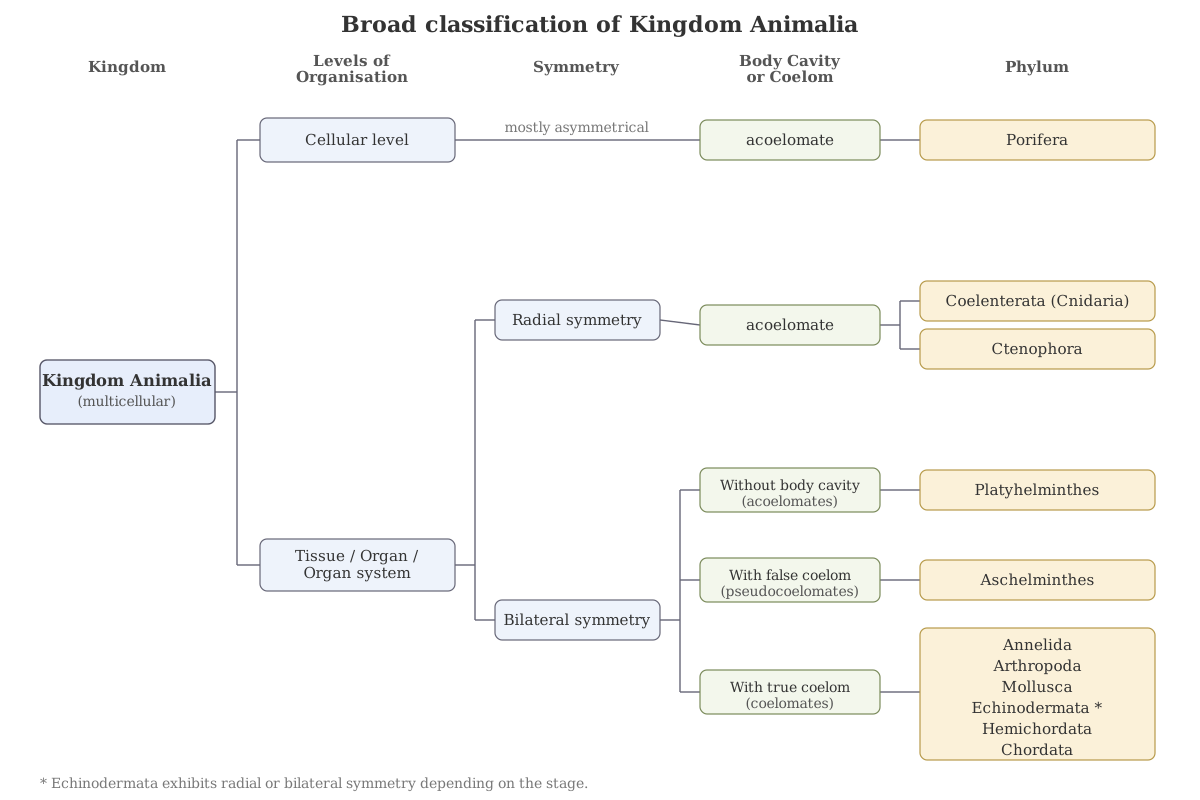
Drawn by us to help you understand the concept clearly, and verified to make sure it's accurate. For exams, practice from your NCERT textbook's own diagram.
This chart shows how the whole animal kingdom is sorted into major groups by applying a series of fundamental features one after another, rather than by outward appearance. Starting from a multicellular ancestor, animals are separated by their level of body organisation (cellular, tissue or organ-system), their symmetry (radial or bilateral), the number of germ layers (diploblastic or triploblastic), the presence and type of body cavity or coelom, and finally the presence or absence of a notochord. Following the branches down this scheme leads to each phylum, showing t …