Business Studies · Ch 10 — Marketing
Industrial Products
Industrial Products
Industrial products are goods that businesses buy to use as inputs in making other products. Unlike consumer goods, they are not meant for personal or household use. Examples include raw materials, engines, lubricants, machines, and tools. The buyers of industrial products are not individual consumers but organisations — manufacturers, transport agencies, banks, insurance companies, mining companies, and public utilities. In short, industrial products are bought for non-personal, business use.
Classification of Industrial Products
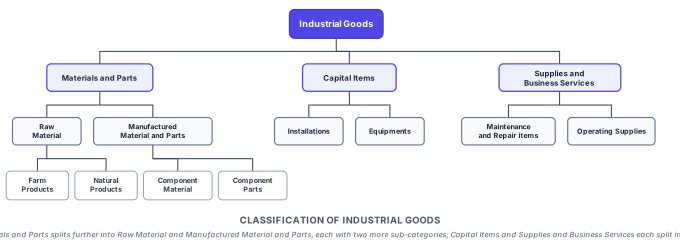
The textbook divides industrial goods into three major categories:
(i) Materials and Parts
These are goods that enter the manufacturer’s product completely — they become part of the finished good. They are of two types:
- (a) Raw materials: Farm products (cotton, sugarcane, oilseeds) and natural products (crude petroleum, iron ore, fish, lumber).
- (b) Manufactured materials and parts: These are again of two types:
- Component materials — like glass, iron, plastic.
- Component parts — like tyres, electric bulbs, steering wheels, batteries.
(ii) Capital Items
These are long-lasting goods used in the production of finished goods. They do not become part of the final product but help make it. They include:
- (a) Installations: Large, expensive items like elevators and mainframe computers.
- (b) Equipment: Smaller, more portable items like hand tools, personal computers, and fax machines.
(iii) Supplies and Business Services
These are short-lasting goods and services that help in developing or managing the finished product. They include:
- (a) Maintenance and repair items: Paint, nails, etc. …
What the Diagram Shows
Our own tree diagram follows the textbook's three-way split of industrial goods. 'Materials and Parts' — goods that enter the manufacturer's product completely — splits into Raw Material (Farm Products and Natural Products) and Manufactured Material and Parts (Component Material and Component Parts). 'Capital Items' — long-lasting goods used to produce the finished good, like Installations and Equipments — and 'Supplies and Business Services' — short-lasting goods like Maintenance and Repair items and Operating Supplies — sit alongside it as the other two main categories.