Computer Science · Ch 11 — Data Communication
Concept of Communication
Concept of Communication
Communication: The Foundation of Data Exchange
The word "Data Communication" is built from two simpler ideas: Data and Communication.
Data refers to any information that can be stored or transmitted — this includes text, images, audio, video, and multimedia files.
Communication is simply the act of sending or receiving data.
Put together, data communication means the exchange of data between two or more devices that are connected to each other through a network. For this exchange to happen, every device involved must be capable of both sending and receiving data over some communication medium (like a cable or wireless signal).
Devices That Communicate
Common examples of devices that can participate in data communication include:
- Personal computers
- Mobile phones
- Laptops
- Printers
- Servers
- Switches
These devices are connected through a communication medium — the physical or wireless path that carries information from one end to the other.
A Simple Network in Action
The textbook illustrates this with a simple network (Figure 11.1 in the NCERT book). In that network, four different types of devices are connected together:
- A computer
- A printer
- A server
- A switch
The switch acts as a central point that connects the other devices. The printer is shown as being shared — meaning multiple devices on the network can use it. The server stores and manages data for the network. All these devices are linked through a communication medium, forming a small but complete network.
The key takeaway: data communication is not just about sending data — it requires devices that can both send and receive, and a medium to carry the data between them.
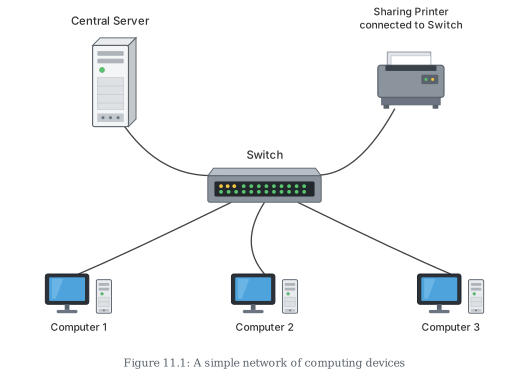
Drawn by us to help you understand the concept clearly, and verified to make sure it's accurate. For exams, practice from your NCERT textbook's own diagram.
This shows the basic pieces of a network: a Central Server, three computers, a shared printer, and a Switch tying them all together. The Server holds shared resources or data, the Switch is the connection point every device wires into, and the printer is a shared resource any of the three computers can send jobs to.
The important thing to notice is that no two computers connect directly to each other — every connection passes through the Switch. That's what makes it a proper network rather than just a pile of cables: one central point that every device can reach.