Computer Science · Ch 11 — Societal Impact
Communication Etiquettes
Communication Etiquettes
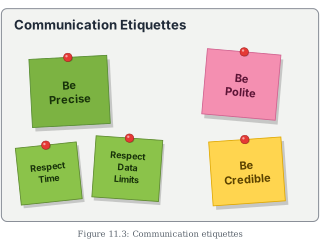
Digital communication takes many forms — email, texting, instant messaging, talking on a cell phone, audio or video conferencing, posting on forums and social networking sites. All of them are excellent ways to connect with people, exchange ideas and share data and knowledge. But good communication over email, chat rooms and similar forums requires a digital citizen to follow the communication etiquettes shown in Figure 11.3: be precise, be polite, and be credible.
(A) Be Precise
- Respect time. Time — yours and the other person's — is precious.
- Do not waste time responding to unnecessary emails or comments unless they actually have some relevance for you.
- Equally, do not always expect an instant response from others: the recipient may have other priorities.
- Respect data limits. Data and bandwidth are limited resources for many users, so avoid sending very large attachments. Instead:
- send compressed files, or
- share a link to the file through cloud storage such as Google Drive, Microsoft OneDrive or Dropbox.
(B) Be Polite
Digital communication may be:
- synchronous — happening in real time, like chat or audio/video calls; or
- asynchronous — with a delay between message and reply, like email, forum posts or comments.
In both modes the rule is the same: be polite and non-aggressive. Avoid abusive language even when you disagree with someone else's point of view.
(C) Be Credible
Every comment, reply, email and forum post you make contributes, over time, to your credibility. Think of how you behave on a discussion forum yourself: you tend to follow the posts of certain members while ignoring others, and before relying on someone's advice you often scan their previous comments to judge whether they are trustworthy. Others do exactly the same to you. Being careful and accurate in what you write is therefore an investment in your own reputation.
Beware of spam
Junk email is called spam. On receiving spam, the safe behaviour is twofold:
- do not reply to it, and
- do not open any attachment it carries.
Nothing is permanently deleted …
Drawn by us to help you understand the concept clearly, and verified to make sure it's accurate. For exams, practice from your textbook's own diagram.
This figure presents the communication etiquettes of Section 11.3.2 as a noticeboard of sticky notes. A rectangular outlined panel carries the bold title "Communication Etiquettes" centred at the top, and inside it five square sticky notes are pinned, each fixed with a red push-pin and casting a slight drop shadow — as if someone had posted reminders above their desk.
The layout groups the notes to mirror the section's structure:
- At the upper left, a green note reading "Be Precise", with two smaller green notes just below and beside it reading "Respect Time" and "Respect Data Limits". The colour and placement show that these two are the components of precision: don't waste your own or others' time on unnecessary messages, and avoid huge attachments — compress files or share cloud links instead.
- At the upper right, a pink note reading "Be Polite": whether the conversation is synchronous (chat, audio/video calls) or asynchronous (email, forum posts, comments), stay courteous and non-aggressive, even in disagreement.
- At the lower right, beneath "Be Polite", a yellow note reading "Be Credible": every comment and post you make builds or erodes your credibility over time, so write carefully. …