Physical Education · Ch 2 — Children and Women in Sports
Lordosis
Lordosis
Meaning and Definition
Lordosis is a spinal deformity characterised by an excessive inward or forward curvature of the lumbar region of the spine. In a normal spine, the lumbar curve is naturally concave inward — this is called the lordotic curve and it is a healthy feature that helps distribute weight and absorb shock. Lordosis as a deformity occurs when this curve becomes exaggerated beyond the normal range.
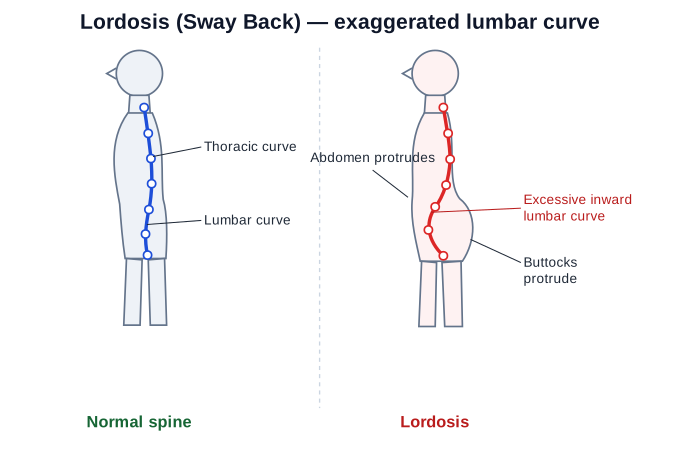
Drawn by us to help you understand the concept clearly, and verified to make sure it's accurate. For exams, practice from your textbook's own diagram.
A lateral (side) view of a human figure with the spine drawn in, emphasising the exaggerated inward, concave curvature of the lower back / lumbar region - the 'sway back' of Lordosis, with th …
The word itself comes from the Greek lordos, meaning bent backward. In the deformed state, the lower back arches deeply inward, the abdomen protrudes forward, and the buttocks appear more prominent. A person with lordosis often stands with a hollow-backed appearance and may have difficulty flattening the lower back against the floor when lying down.
Lordosis is not the same as kyphosis (excessive outward curve of the thoracic spine) or scoliosis (lateral curvature). It is specifically an exaggerated lumbar curve.
How Lordosis Is Recognised
Recognition of lordosis is primarily visual and postural. A teacher, coach, or examiner looks for the following signs when a student stands in a relaxed, natural posture:
- The lower back arches deeply inward, creating a visible hollow above the buttocks.
- The abdomen protrudes forward, even when the person tries to hold it in.
- The buttocks appear more prominent or pushed backward.
- When the person lies flat on their back on a hard surface, there is a noticeable gap between the lower back and the floor — the hand can easily slide under the lumbar region.
- The pelvis tilts forward (anterior pelvic tilt), which is the mechanical cause of the exaggerated curve.
A simple screening test: ask the student to stand against a wall with heels, buttocks, shoulders, and head touching the wall. In a normal spine, the gap between the lower back and the wall should be about the thickness of a hand. In lordosis, this gap is significantly larger.
Causes of Lordosis
Lordosis develops from a combination of muscular imbalance, lifestyle factors, and sometimes underlying medical conditions. The causes named in the syllabus are:
Weak Abdominal Muscles
The abdominal muscles (rectus abdominis, obliques, and transversus abdominis) act as the front anchor of the pelvis. When they are weak, they cannot hold the pelvis in a neutral position. The stronger hip flexors and lower back muscles then pull the pelvis forward into an anterior tilt, which forces the lumbar spine into an exaggerated curve. This is the most common mechanical cause.
Obesity
Excess abdominal fat shifts the body's centre of gravity forward. To compensate and keep the body upright, the lower back arches more deeply, pulling the pelvis into anterior tilt. The extra weight also places chronic strain on the lumbar spine and weakens the abdominal wall over time.
Imbalanced Diet
A diet deficient in calcium, vitamin D, and protein can lead to poor bone density and weak muscle development. In growing children, this makes the spine more vulnerable to deformities. Nutritional deficiencies also impair the body's ability to repair and strengthen muscle tissue, including the abdominal muscles.
Improper Development of the Muscles
During growth spurts, if a child develops strong back and hip flexor muscles without corresponding development of the abdominal and gluteal muscles, the muscular imbalance pulls the spine into lordosis. This is common in young athletes who train certain muscle groups heavily (e.g., gymnasts, dancers) while neglecting core strengthening.
Wrong Posture
Prolonged poor posture — standing with the belly pushed forward and the lower back arched, or sitting slumped with the lower back unsupported — trains the spine into the lordotic position. Over months and years, the muscles and ligaments adapt to this position, making it the default posture even when the person tries to stand straight.
Lordosis in children is often postural and reversible with exercise. However, if left uncorrected, it can become structural — meaning the bones themselves adapt to the curve — and become much harder to treat.
Problems Created by Lordosis
Lordosis is not merely a cosmetic issue. It creates real functional problems:
- Lower back pain: The exaggerated curve places uneven pressure on the lumbar vertebrae and compresses the facet joints at the back of the spine. This causes chronic aching pain in the lower back, especially after standing or walking for long periods.
- Muscle fatigue: The lower back muscles (erector spinae) are in constant contraction to hold the arched position. They tire quickly, leading to stiffness and soreness.
- Hip and knee strain: The forward tilt of the pelvis changes the alignment of the hip joints and puts extra stress on the hamstrings and knee ligaments. Over time, this can contribute to hip pain and patellofemoral pain syndrome.
- Reduced flexibility: The tight lower back and hip flexor muscles limit the range of motion in bending forward. A person with lordosis often cannot touch their toes without bending their knees.
- Disc problems: The uneven compression on the lumbar discs increases the risk of disc bulges and herniations, particularly at the L4-L5 and L5-S1 levels.
- Digestive issues: The protruding abdomen and forward tilt of the pelvis can compress the abdominal organs, sometimes contributing to constipation or discomfort after meals.
Corrective Measures
Correcting lordosis requires a two-pronged approach: stretching the tight muscles that pull the pelvis forward, and strengthening the weak muscles that should hold it in neutral. The syllabus names specific asanas and exercises that target these goals.
Halasana (Plough Pose)
Halasana is a yoga posture in which the person lies on their back and lifts both legs over the head until the toes touch the floor behind them, with the spine in a flexed (rounded) position.
How it corrects lordosis: Halasana stretches the entire back of the body, including the lower back muscles (erector spinae) that are tight in lordosis. By rounding the spine in the opposite direction to the lordotic curve, it helps restore flexibility to the lumbar region. The pose also strengthens the abdominal muscles, which must contract to lift and control the legs.
Procedure:
- Lie flat on the back with arms alongside the body, palms facing down.
- Slowly lift both legs to a 90-degree angle, using the abdominal muscles.
- Continue lifting the hips off the floor, supporting the lower back with the hands.
- Bring the legs over the head, keeping them straight, until the toes touch the floor behind the head.
- Hold the position for 10–30 seconds, breathing normally.
- To release, slowly roll the spine back down, vertebra by vertebra.
Beginners who cannot touch the floor behind them can keep the legs at an angle or use a folded blanket under the shoulders for support. Never force the neck — the weight should be on the shoulders, not the cervical spine.
Paschimottanasana (Seated Forward Bend)
Paschimottanasana is a seated forward-bending posture in which the person sits with legs extended straight forward and bends from the hips to reach toward the feet.
How it corrects lordosis: This asana stretches the entire posterior chain — the hamstrings, the lower back muscles, and the spine itself. In lordosis, the hamstrings are often tight and pull the pelvis into posterior tilt when the person tries to bend forward. Stretching them releases this pull and allows the pelvis to return to neutral. The forward bending motion also directly counteracts the excessive lumbar curve.
Procedure:
- Sit on the floor with both legs extended straight forward, feet together.
- Inhale and raise both arms overhead, lengthening the spine.
- Exhale and hinge forward from the hips (not the waist), keeping the spine as straight as possible.
- Reach for the feet, ankles, or shins — wherever the hands comfortably reach.
- Hold the position for 20–30 seconds, breathing deeply.
- Inhale and slowly come back up, keeping the spine long.
Do not round the back to reach further. The goal is to lengthen the spine forward, not to curl it. If the back rounds, the stretch goes into the wrong part of the spine and does not correct lordosis.
Forward Bending (General)
Any forward-bending movement — standing or seated — helps correct lordosis by stretching the tight lower back and hamstring muscles. The key principle is to bend from the hips, keeping the spine long, so that the lumbar curve flattens rather than exaggerates.
Standing forward bend (Uttanasana): Stand with feet hip-width apart, exhale, and fold forward from the hips, letting the head hang. Keep the knees slightly bent if the hamstrings are tight. Hold for 20–30 seconds.
How it works: Gravity helps lengthen the spine and stretch the posterior muscles. The forward tilt of the pelvis in the opposite direction to the lordotic tilt retrains the hip and spine position.
Sit-ups / Abdominal Strengthening
Sit-ups and other abdominal exercises directly target the weak muscles that allow lordosis to develop. Strong abdominals pull the front of the pelvis upward, reducing the anterior tilt and flattening the lumbar curve.
How it corrects lordosis: Each sit-up contraction shortens the rectus abdominis and obliques, which attach to the pubic bone and rib cage. When these muscles are strong, they hold the pelvis in a neutral or slightly posterior tilt, preventing the lower back from arching excessively.
Procedure for a basic sit-up:
- Lie on the back with knees bent and feet flat on the floor, hip-width apart.
- Place the hands across the chest or behind the head (do not pull on the neck).
- Exhale and curl the upper body toward the knees, lifting the shoulder blades off the floor.
- Hold the contraction for a moment, then inhale and lower slowly.
For lordosis correction, the quality of the movement matters more than the number of repetitions. Keep the lower back pressed into the floor throughout the exercise — if the back arches, the abdominals are not working correctly.
Toe-touching
Toe-touching is a simple standing forward-bend exercise. Stand with feet together, bend forward from the hips, and try to touch the toes (or the floor) with the fingertips. …