Physical Education · Ch 3 — Yoga
Ujjayi Pranayama
Ujjayi Pranayama
In Ujjayi Pranayama, both nostrils are used for inhaling and the left nostril for exhaling. A sound resembling "Aum" (a soft hissing) is produced during the practice by a partial closure of the glottis at the back of the throat — this characteristic sound is the peculiarity from which the pranayama takes its name.
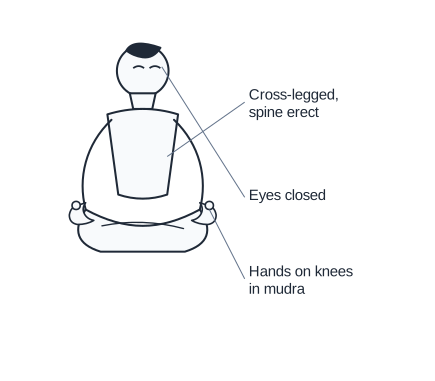
Drawn by us to help you understand the concept clearly, and verified to make sure it's accurate. For exams, practice from your textbook's own diagram.
A bare-torso person sits on a mat in a cross-legged meditative posture (Padmasana or Sukhasana) with the back erect and the eyes closed. Both hands rest on the knees with the fingers in a mudra. The calm, upright seated posture is the position held for Ujjayi breathing, in which the breath is …
Technique
- Sit in any meditative asana and close the mouth.
- Inhale slowly through both nostrils in a smooth, uniform manner.
- Retain the breath for as long as you can hold it comfortably, then exhale slowly through the left nostril, closing the right nostril with the right thumb.
- Expand the chest as you inhale.
- During inhalation a peculiar hissing sound is produced by the partial closing of the glottis.
- The sound should be of a mild and uniform pitch, and the practice should be continued steadily.
Benefits
- Removes heat from the head.
- Makes the practitioner's voice clear and melodious.
- Removes phlegm in the throat and helps manage all sorts of pulmonary diseases.
- It is good for asthmatic patients and for those with respiratory disorders.
Why the throat-sound matters
The soft hissing sound in Ujjayi comes from a slight narrowing of the glottis, the opening between the vocal cords, which creates a gentle resistance to the flow of air. This resistance naturally slows the breath down and makes each inhalation and exhalation longer and more controlled than normal — which is why Ujjayi is often used as a steady "background breath" while holding asanas, and not only as a stand-alone pranayama.