Commerce · Ch 1 — Financial Markets
Concept of Financial Market
Concept of Financial Market
A business is part of an economic system that has two main sectors — households, which save funds, and business firms, which invest these funds. A financial market links the savers and the investors by mobilising funds between them. In doing so it performs what is called an allocative function: it directs the funds available for investment towards their most productive use.
When this allocative function is performed well, two consequences follow:
- The rate of return offered to households (savers) is higher.
- Scarce resources are directed to those firms that have the highest productivity for the economy.
There are two major alternative mechanisms through which the allocation of funds can take place — through banks or through financial markets. Households can deposit their surplus funds with banks, which in turn lend these funds to business firms. Alternatively, households can buy the shares and debentures a firm offers through the financial markets. The process by which this allocation is done is called financial intermediation. Banks and financial markets are competing intermediaries in the financial system, and together they give households a choice of where to place their savings.
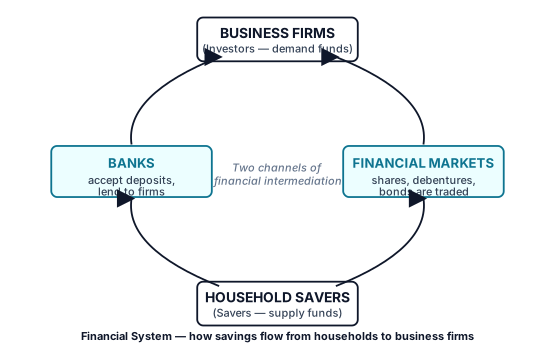
Drawn by us to help you understand the concept clearly, and verified to make sure it's accurate. For exams, practice from your textbook's own diagram.
Our own schematic of the financial system. Household savers (who supply funds) sit at the bottom and business firms (who demand funds for investment) at the top. Savings reach the firms through two competing channels of financial intermediation — banks (which accept deposits and lend to firms) and financial markets (where shares, debentures and bonds are issued and traded). Bo …
…