Zoology · Ch 2 — Breathing and Exchange of Gases
Mechanism of Breathing
Mechanism of Breathing
Breathing is the mechanical process of moving air into and out of the lungs. It has two stages: inspiration, in which outside air is pulled in, and expiration, in which the air inside the alveoli is pushed out.
Air moves along a pressure gradient
Air flows between the lungs and the atmosphere only when a difference in pressure is created between them.
- Inspiration happens when the pressure inside the lungs (the intra-pulmonary pressure) becomes lower than the atmospheric pressure — a negative pressure relative to the outside.
- Expiration happens when the intra-pulmonary pressure rises above the atmospheric pressure.
These pressure differences are produced by the diaphragm together with a specialised set of muscles between the ribs — the external and internal intercostal muscles.
How inspiration is produced
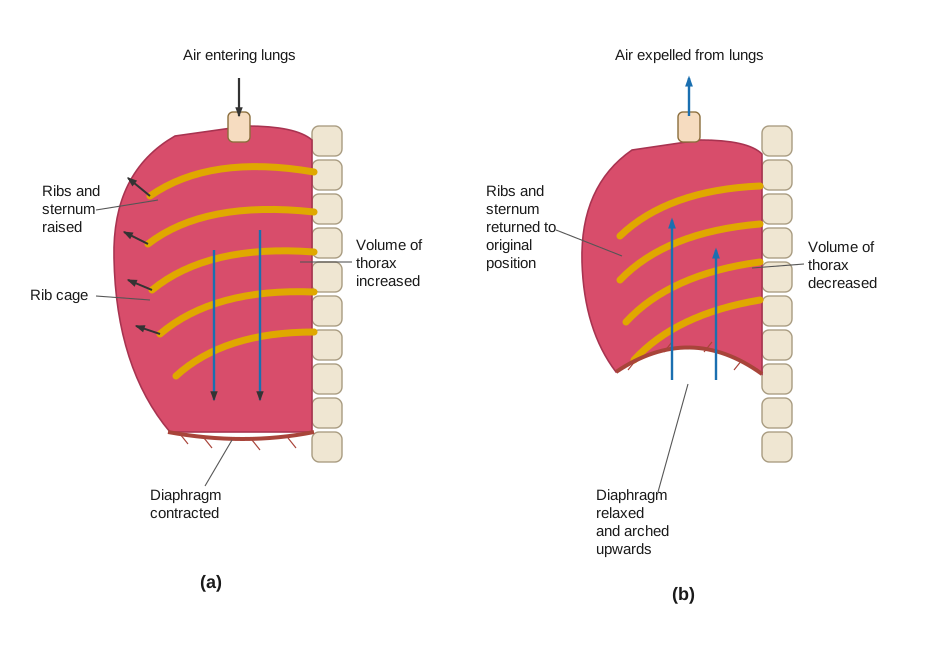
- Contraction of the diaphragm increases the volume of the thoracic chamber along the front-to-back (antero-posterior) axis.
- Contraction of the external intercostal muscles lifts the ribs and the sternum, increasing the thoracic volume along the back-to-front (dorso-ventral) axis.
- The overall rise in thoracic volume raises the pulmonary volume in the same way.
- A larger pulmonary volume lowers the intra-pulmonary pressure below atmospheric pressure, so air is forced in from outside — this is inspiration.
How expiration is produced
- The diaphragm and intercostal muscles relax, returning the diaphragm and sternum to their resting positions.
- This reduces the thoracic volume and therefore the pulmonary volume.
- The smaller pulmonary volume raises the intra-pulmonary pressure slightly above atmospheric pressure, so air is expelled — this is expiration. …
Drawn by us to help you understand the concept clearly, and verified to make sure it's accurate. For exams, practice from your textbook's own diagram.
This figure shows the mechanics of breathing, so read it as a before-and-after pair comparing inspiration and expiration. In the inspiration view, watch the dome-shaped diaphragm at the floor of the chest flatten as it contracts while the external intercostal muscles between the ribs lift the ribs and sternum upward and outward. Both movements enlarge the thoracic cavity, and the lungs expand with it; a bigger lung volume lowers the pressure inside the lungs below the outside air, so air is pushed in. In the expiration view, notice the opposite: the diaphragm relaxes back into its dome and the ribs settle down, shrinking the chest, raising the internal lung pressure above the atmosphere, and driving air out. The …