Physical Education · Ch 10 — Training & Doping in Sports
Training Load
Training Load
Training load is the physiological and psychological demand placed on an individual through motor stimulus (movement), with the aim of improving and maintaining performance capacity. Load is an inevitable part of conditioning, training and competition; when it is safely managed it improves athletic capacity and performance and reduces the risk of injury and illness.
Training load is of two types:
- Outer (external) load — the externally measurable work the athlete does.
- Inner (internal) load — the body's internal response to that work.
Features of training load
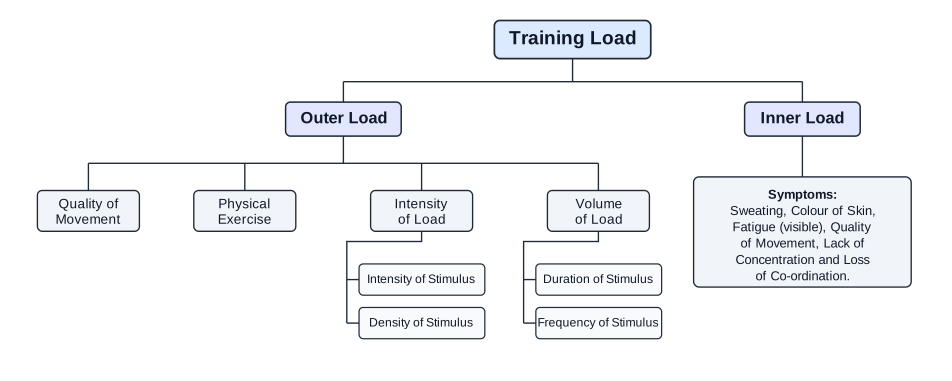
The diagram below sets out the complete concept of training load and its features.
Drawn by us to help you understand the concept clearly, and verified to make sure it's accurate. For exams, practice from your textbook's own diagram.
Hierarchy of training load. The root 'Training Load' splits into Outer Load and Inner Load. Outer Load has four branches: Quality of Movement, Physical Exercise, Intensity of Load (which splits into Intensity of Stimulus and Density of Stimulus) and Volume of Load (which splits into Duration of Stimulus and Frequency of Stimulus). Inner Load lists the body's symptoms: sweating, colour of skin, visible fatig …
- Outer load is described by the quality of movement, the physical exercise performed, the intensity of load (made up of the intensity of stimulus and the density of stimulus) and the volume of load (made up of the duration of stimulus and the frequency of stimulus).
- Inner load shows up as the body's symptoms — sweating, colour of the skin, visible fatigue, the quality of movement, lack of concentration, and loss of co-ordination.
By adjusting the components of the outer load — intensity, volume, density, duration and frequency — the coach controls how demanding the training is, while watching the inner-load symptoms to judge how the athlete is coping.