Biology · Ch 15 — Body Fluids and Circulation
Double Circulation
Double Circulation
In humans, blood does not move randomly — it follows a fixed route through the blood vessels, and the whole system is arranged as a double circulation, meaning blood passes through the heart twice in one complete journey around the body.
Structure of blood vessels
Both arteries and veins are built from three layers:
- Tunica intima — the innermost lining, made of squamous endothelium.
- Tunica media — the middle layer of smooth muscle and elastic fibres. This layer is comparatively thin in veins.
- Tunica externa — the outer layer of fibrous connective tissue containing collagen fibres.
Pulmonary circulation
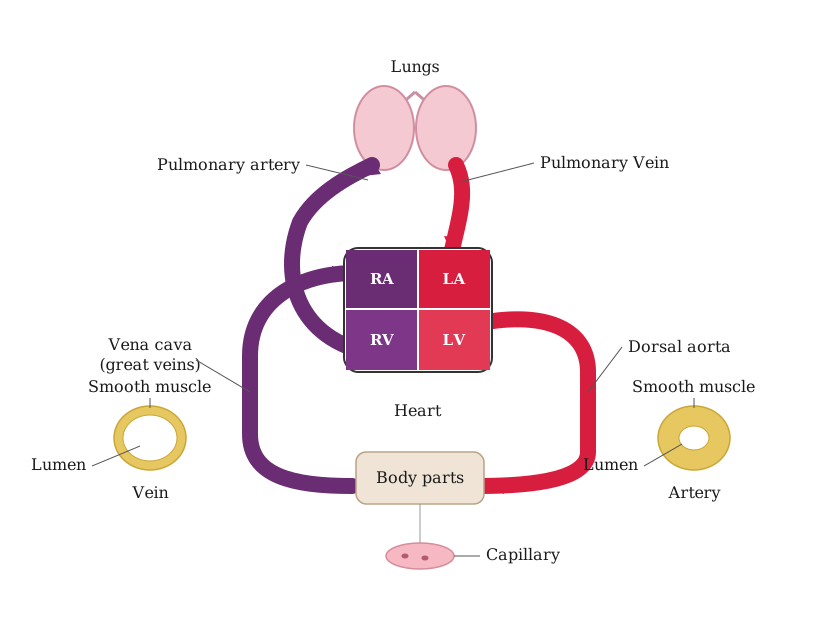
The right ventricle pumps deoxygenated blood into the pulmonary artery, which delivers it to the lungs. In the lungs the blood is oxygenated, and this oxygenated blood is then carried by the pulmonary veins back into the left atrium. This loop between the heart and the lungs is the pulmonary circulation.
Systemic circulation
The left ventricle pumps the oxygenated blood into the aorta. From there a network of arteries, arterioles and capillaries carries it to the body tissues. The deoxygenated blood returning from the tissues is collected by venules, veins and finally the vena cava, and emptied into the right atrium. This loop between the heart and the rest of the body is the systemic circulation. Its role is to supply the tissues with nutrients, oxygen and other essential substances, and to carry away carbon dioxide and other harmful substances for elimination.
Special vascular connections …
Drawn by us to help you understand the concept clearly, and verified to make sure it's accurate. For exams, practice from your textbook's own diagram.
This figure maps the fixed route that blood follows through the body and shows why the human system is called a double circulation — blood passes through the heart twice in one full journey. Follow the right ventricle as it pushes deoxygenated blood, usually drawn in blue, into the pulmonary artery and on to the lungs; there the blood picks up oxygen and returns through the pulmonary veins to the left atrium. This short heart-to-lung-and-back loop is the pulmonary circulation. Now trace the other loop: the left ventricle drives oxygenated blood, usually drawn in red, into the aorta, which branches into arteries, arterioles and finally capillaries reaching every tissue. The tissues take up oxygen and nutrients, and the deoxygenated blood is gathered by venules and veins into the vena cava, which empties into the right atrium. This heart-to-body-and-back loop is the sy …