Business Studies · Ch 10 — Marketing
Sales Promotion
Sales Promotion
Sales promotion is a short-term incentive designed to encourage buyers to make an immediate purchase. It covers all promotional efforts other than advertising, personal selling, and publicity. The core idea is to give the customer a reason to buy now rather than later. Companies use sales promotion to supplement their other promotional activities — it works alongside advertising and personal selling, not in place of them.
Sales promotion tools are aimed at three different groups: customers (free samples, discounts, contests), middlemen or tradesmen (cooperative advertising, dealer discounts, dealer incentives and contests), and the company's own salespersons (bonuses, salesmen contests, special offers). The key is that these are short-term measures to boost sales quickly.
Merits of Sales Promotion
- (i) Attention Value: Because incentives are involved, sales promotion activities grab people's attention more effectively than ordinary advertising.
- (ii) Useful in New Product Launch: When a new product enters the market, sales promotion tools can persuade people to break away from their regular buying habits and try the new product.
- (iii) Synergy in Total Promotional Efforts: Sales promotion is designed to supplement personal selling and advertising, adding to the overall effectiveness of the firm's promotional efforts.
Limitations of Sales Promotion
- (i) Reflects Crisis: If a firm relies too frequently on sales promotion, it may give the impression that the company is unable to manage its sales or that there are no takers for its product.
- (ii) Spoils Product Image: Frequent use of sales promotion tools can damage the product's image. Buyers may start feeling that the product is not of good quality or is not appropriately priced.
Commonly Used Sales Promotion Activities
- Rebate: Offering products at special prices to clear off excess inventory. Example: a car manufacturer's offer to sell a particular brand of car at a discount of Rs 10,000 for a limited period.
- Discount: Offering products at less than the list price. Example: a shoe company's offer of 'Discount Up to 50%' or a shirt marketer's offer of '50+40% Discount'.
- Refunds: Refunding a part of the price paid by the customer on some proof of purchase, such as returning empty foils or wrappers. This is commonly used by food product companies.
- Product Combinations: Offering another product as a gift along with the purchase of a product. Example: a pack of half a kilogram of rice free with a bag of atta (wheat flour), or 'Get 128 kB Memory Card Free with a Digicam'.
- Quantity Gift: Offering extra quantity of the product. Commonly used by marketers of toiletry products. Example: a shaving cream's offer of '40% extra' or a hotel's offer of 'Take a 2 Night 3 Days Package and Get an Extra Night Stay At Just Rs 500'.
- Instant Draws and Assigned Gift: For example, 'Scratch a Card' or 'Burst a Cracker' and instantly win a refrigerator, car, T-shirt, or computer with the purchase of a TV.
- Lucky Draw: For example, the offer of a bathing soap to win a gold coin on a lucky draw coupon, or free petrol on purchase of a certain quantity of petrol from a given petrol pump.
- Usable Benefit: Purchase goods worth Rs 3000 and get a holiday package worth Rs 3000 free, or 'Get a Discount Voucher for Accessories on Apparel Purchase of Rs 1000 and above'. …
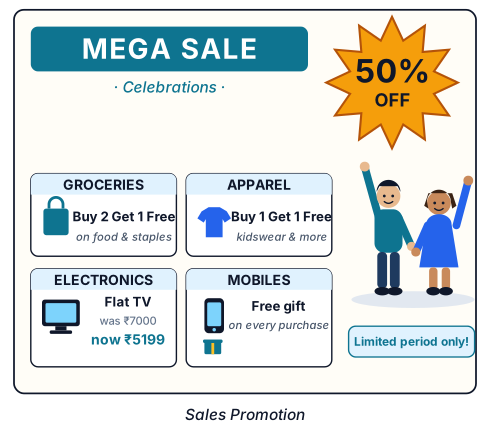
Drawn by us to help you understand the concept clearly, and verified to make sure it's accurate. For exams, practice from your textbook's own diagram.
Our own illustration of sales promotion — the short-term incentives a marketer offers to boost immediate sales: a store's promotional flyer packed with discounts, 'buy-one-get-one' deals, price cut-offs and free gifts across product categories. These offers are tools that push customers to buy now, complementin …